Warren Buffett steps down as Berkshire Hathaway chairman, hands title to son Howard
Warren Buffett, 96, became chairman emeritus of Berkshire Hathaway on Friday after 60 years leading the board, with his son Howard G. Buffett elected chairman — a largely symbolic final step in a succession that made Greg Abel chief executive eight months ago.
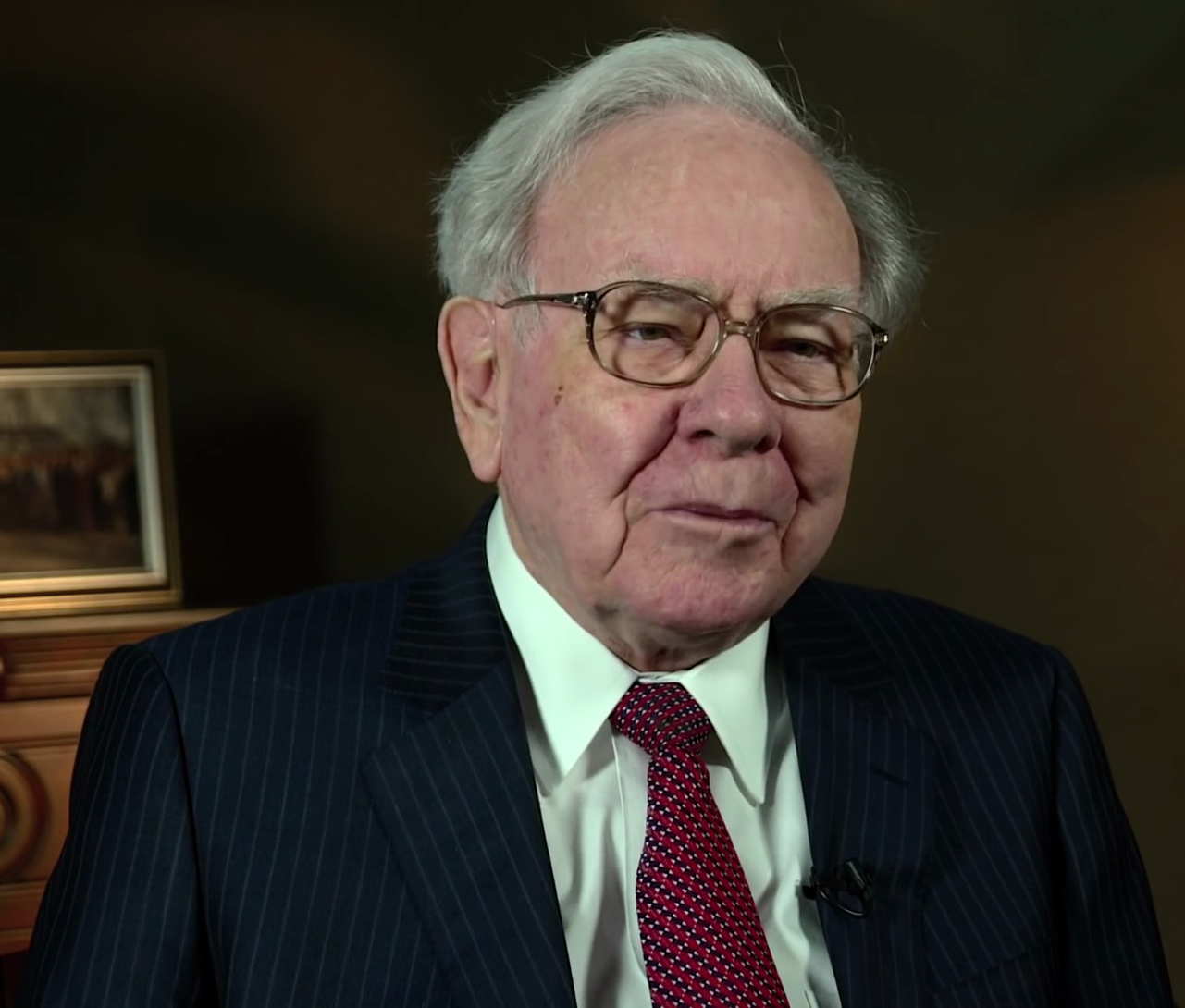
Warren E. Buffett has stepped down as chairman of Berkshire Hathaway Inc., ending 60 years at the helm of the company's board and taking the title of chairman emeritus, Berkshire said Friday. The 96-year-old investor will remain a director, but the board elected his son, Howard G. Buffett, 71, as the conglomerate's new chairman, effective immediately, according to a written announcement the company posted on its website.
The move completes a transition that Berkshire's board first mapped out years ago and that began in earnest on January 1, when Greg Abel succeeded Buffett as chief executive. Susan L. Decker will continue as lead independent director, the company said, a role that carries added weight now that a member of the Buffett family, rather than an outside executive, holds the chairman's title. Berkshire's Class A and B shares, listed on the New York Stock Exchange, gave the company a market value of roughly $1.09 trillion heading into the announcement.
A succession eight months in the making
Buffett has run Berkshire since 1965, when he took control of a failing New England textile mill and rebuilt it into a sprawling holding company spanning insurance and reinsurance, utilities and energy, the BNSF freight railroad, manufacturing, services and retail. By Berkshire's own accounting, disclosed annually in its 10-K filed with securities regulators, the per-share market value of the company compounded at roughly 19.7% a year from 1965 through last year, versus about 10.5% for the S&P 500 with dividends reinvested — a gap that, compounded over six decades, has been tallied elsewhere at a cumulative gain exceeding 5.5 million percent.
Friday's announcement was the second step of a two-stage handoff. Buffett told shareholders in May 2025 that he intended to cede the chief executive role to Abel, his longtime vice chairman for non-insurance operations, at year-end, while staying on as chairman. That plan took effect on schedule, and Abel has since posted strong early results: Berkshire's operating earnings rose 16% year over year to nearly $13 billion in the second quarter, the company disclosed in its quarterly report to the SEC, while Abel resumed share buybacks worth roughly $4.8 billion and added to the company's stake in Alphabet. Berkshire's cash pile, meanwhile, had swelled toward $400 billion earlier this year.
Guardian of the culture, not the balance sheet
Howard Buffett brings no operating background at Berkshire itself, and the company has been explicit that his job is not Abel's. He has served as a Berkshire director since 1993 — a 33-year board tenure — while running, since 1999, the charitable foundation devoted to global food security and conflict mitigation that bears his name. He spent nearly a decade as a United Nations Goodwill Ambassador Against Hunger for the World Food Programme and has sat on the boards of Archer Daniels Midland, ConAgra Foods, the Coca-Cola Company, Coca-Cola Enterprises, FirsTier Financial and Lindsay Corporation, chairing several of them.
The arrangement is unusual for a company of Berkshire's size, but it is consistent with a succession plan the board has signaled for years: an outside operator running the businesses, a family member safeguarding the culture, and a strengthened independent director overseeing both. It is also a milestone in its own right for a board that has been thinning out its links to Berkshire's founding era. Charlie Munger, Buffett's vice chairman and closest partner for more than six decades, died in November 2023 at 99; Buffett's move to chairman emeritus removes the last member of that original leadership pairing from an executive or chairman title at the company, even as he keeps his board seat and, by every account, his appetite for reading annual reports.
Greg Abel, in a statement issued on behalf of Berkshire's board, framed the new chairman's mandate in similarly narrow terms: "Warren's impact on Berkshire and its owners is without parallel in the history of American business. The culture Warren built and the values he championed will remain at the heart of Berkshire, and Howard will be their guardian. We are grateful to Howard for the care, discipline, and deep understanding of Berkshire he will bring to his new role, and to Sue Decker for her continued leadership and valued contributions as Lead Independent Director." Berkshire's most recent proxy statement filed with the Securities and Exchange Commission lists Decker among the longest-serving of Berkshire's outside directors, a group the company has long kept deliberately small.
Buffett's own letter to shareholders, attached to the release, described the arrangement in blunter terms. He wrote that Abel "has taken hold of the Chief Executive Officer job in every respect" and "has been making the decisions that matter for some time now," and cast his son's new role as custodial rather than managerial: "Greg runs the company; Howard will guard its culture and values — both worth more than anything on our balance sheet. Think of Howard as a policy the shareholders own and hope never to claim against."
"Serving as your Chairman has been the privilege of a lifetime, and I have never taken your trust for granted. Father Time always wins." — Warren E. Buffett, letter to Berkshire Hathaway shareholders, September 18, 2026
Investors, largely unmoved, wait for the next earnings call
The market's reaction was subdued, a sign of how thoroughly the succession had already been priced in. Berkshire's Class A shares had already slipped about 2% on Thursday alongside a broader selloff tied to the Federal Reserve's latest rate decision, and Class B shares traded only fractionally higher in early Friday dealing after the chairman announcement went out, according to reporting on the transition. Analysts who cover the company have argued for months that Berkshire's decentralized structure — dozens of operating subsidiaries run largely on their own, with capital allocation concentrated at headquarters — was built to survive exactly this kind of leadership change, and that Abel's ascent to chief executive eight months ago was always the more consequential milestone for the stock.
That has not stopped renewed attention on Berkshire's unusual governance arrangement, in which operating authority and the chairman's title are now split between a non-family chief executive and a member of the founding family who holds no executive post. Coverage since the announcement has revisited the size of Buffett's personal fortune built alongside Berkshire's rise and the six decades of shareholder letters that made him, in the words of one national outlet's retrospective, one of the most closely read voices in American finance. Others have used the moment to revisit just how wide the gap between Berkshire's returns and the broader market has grown since 1965, a stretch of outperformance investment writers have struggled to find a precedent for.
What happens next
Nothing about Berkshire's day-to-day operations changes immediately. Abel remains chief executive with full authority over capital allocation, acquisitions and the company's roughly ninety operating subsidiaries; Decker continues to run board oversight in her lead-director capacity; and Buffett, now chairman emeritus, keeps his board seat and, by his own account, his enthusiasm for the job, writing that he has "never felt better about what comes next." The company did not announce any change to its dividend policy, which remains nonexistent, or to its buyback program. Berkshire's insurance units, BNSF, the utility businesses and its dozens of smaller manufacturing and retail operations continue reporting through the same management structure Abel has overseen all year, and the change in the chairman's title does not, on its own, alter who signs off on acquisitions or capital allocation.
The next scheduled test of the new arrangement will be Berkshire's third-quarter earnings report, expected in early November, followed by the annual shareholder letter and meeting next spring — the first in more than six decades that Buffett will attend as chairman emeritus rather than chairman. Succession planners and governance analysts will also be watching how Howard Buffett exercises what the company has described as a values-and-culture mandate in practice, particularly if Abel or the board face a decision — on acquisitions, on succession further down the management bench, or on capital return — that tests the boundary between running the company and guarding what it stands for.

States and Writers Guild Settle Suits, Clearing Path for Paramount-Warner Bros. Merger

AMD joins the trillion-dollar chip club as AI supply deals fuel a record rally

SpaceX's doubled weighting in the Nasdaq-100 forces a $22 billion trade in a single closing bell