Hayward Recalls 4,600 Gas Pool Heaters Over Carbon Monoxide Risk
The CPSC says the company's high-end dual-fuel Universal-HC heaters can produce elevated carbon monoxide during operation; no injuries have been reported, and Hayward says most units are already repaired.
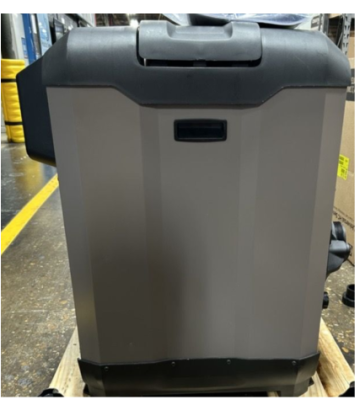
The U.S. Consumer Product Safety Commission has announced the recall of about 4,600 gas-fired pool heaters made by Hayward Industries after the company found that the units can produce dangerous levels of carbon monoxide during normal operation, a hazard the agency says carries a risk of serious injury or death.
The recall, posted by the Consumer Product Safety Commission on September 17, covers the company's Universal-HC Series model HDFS400, a 400,000 BTU dual-fuel heater built to run on either natural gas or propane. No injuries or deaths have been linked to the units, and Hayward says it had already repaired more than 90 percent of the recalled heaters under a corrective-action program before the public notice went out.
The scope of the recall
The recalled heaters are brown with black tops, measure roughly 21 inches long, 28 inches wide and 31 inches tall, and carry a digital display control panel along with a molded base fitted with tie-down connections. The Hayward name and the model number HDFS400 appear on a data plate mounted near the vent. They were sold nationwide by pool equipment distributors, builders and service professionals from March through July of this year, at a price of roughly $5,600 apiece, according to the recall notice.
Because the heaters are sold primarily through commercial channels to installers rather than directly to consumers in retail stores, the recall notice instructs owners to check the data plate rather than a receipt to determine whether their unit is affected. Hayward, based in Charlotte, North Carolina, manufactures the heaters domestically and has posted model photos and inspection information on its own recall page. At roughly $5,600 per unit, the HDFS400 sits at the high end of the residential and light-commercial pool-heating market, a detail that helps explain why the affected population skews toward larger pools, multifamily properties and homeowners association amenities rather than small backyard installations.
How a pool heater becomes a carbon monoxide hazard
Carbon monoxide forms whenever a gas flame does not get enough oxygen to burn completely, a common failure point in dual-fuel appliances that must be tuned differently depending on whether they are running on natural gas or propane. Because propane burns hotter and requires a different fuel-to-air ratio than natural gas, a heater that is misconfigured, poorly vented or installed with the wrong parts for its fuel source can produce elevated carbon monoxide even while otherwise appearing to function normally, which is why manufacturers generally require conversions and installations to be handled by licensed technicians rather than done informally in the field.
"During operation the heaters can produce high levels of carbon monoxide (CO), posing a risk of serious injury or death from carbon monoxide poisoning," the Consumer Product Safety Commission said in its notice.
Carbon monoxide is colorless and odorless, and its dangers around pool equipment specifically are not new. Hayward itself was the subject of a 2019 recall of pool heater vent kits over the same underlying hazard, after the agency found the kits could allow CO to accumulate near a heater's air intake. More broadly, the Centers for Disease Control and Prevention says that more than 400 Americans die every year from unintentional carbon monoxide poisoning unrelated to fires, more than 14,000 are hospitalized and over 100,000 visit an emergency room, with furnaces, generators, grills and other fuel-burning equipment among the most common sources. The agency also warns that enclosing gas-fired equipment too tightly, a common landscaping choice meant to hide pool machinery, can trap exhaust and worsen any underlying combustion problem.
Who is affected
The recall's commercial-grade price point and distribution channel mean the heaters are more likely to be found on larger residential pools, at multifamily properties, or in installations handled by professional pool builders and service companies rather than heaters bought off a retail shelf. The Commission's notice does not list specific states or regions, describing the units as sold "nationwide," which puts the burden on distributors, builders and service technicians who installed HDFS400 units between March and July to notify their customers directly. Owners of unrelated Hayward heater models, or of units sold outside that five-month window, are not covered by the recall. The timing is notable: the affected heaters were installed during the peak spring and summer pool season and are only now being flagged as families in much of the country move into fall, meaning some units may have been running for months before the hazard was disclosed.
What Hayward and regulators are saying
A Hayward spokesperson told Fox 4 in Dallas-Fort Worth that of the 4,600 heaters covered by the recall, more than 90 percent had already received repairs through the company's corrective-action program by the time the notice was published, indicating the company had been working through inspections before the public announcement went out. The pool-industry trade publication Pool Magazine covered the recall for an audience of builders and service professionals most likely to have installed the affected units, underscoring that the primary customers here are trade professionals rather than typical backyard pool shoppers. The Commission's notice carries its standard classification of the hazard as posing a risk of "serious injury or death," language the agency reserves for defects capable of causing significant harm, though it has recorded zero incident reports tied to this recall so far.
What happens next
Hayward and the Commission are telling anyone with an affected heater to stop using it immediately and to schedule a free in-home inspection and repair with a qualified technician by calling 855-500-5288 or emailing [email protected]. The company says it is not requiring proof of purchase, since most units were installed by professionals rather than bought directly by homeowners. With more than 90 percent of the recalled units already inspected or repaired according to the company, the remaining work is expected to focus on tracking down heaters at properties where the distributor or installer has not yet reached the current owner. Safety officials generally recommend installing a carbon monoxide detector near any enclosed pool-equipment area regardless of whether a specific unit has been recalled, since the gas is undetectable without one. The Commission's notice remains open for updates, and its standard practice is to revise a recall notice if additional incidents are later reported.

CDC Survey Finds Teen Mental Health Improving, but a Narrower Report Draws Scrutiny

US regulators recall 195,000 heated blankets after 53 burn injuries

Melissa & Doug recalls 84,000 Target-exclusive fire truck toys over choking hazard
