Sensory swing used by autism and OT families recalled after 14 injuries, including two concussions
The Consumer Product Safety Commission says roughly 25,500 Harkla compression swings sold since 2020 can drop children when a ceiling hook separates; the company is mailing free repair kits rather than refunds.
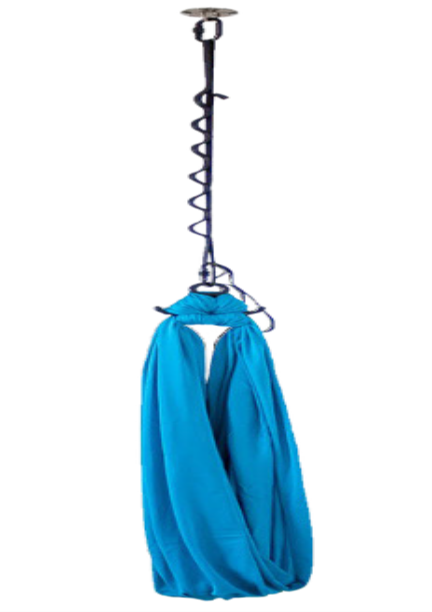
The Consumer Product Safety Commission announced Thursday that about 25,541 children's sensory swings made by Harkla, an Idaho-based company that markets its products to families of children with autism and sensory processing needs, are being recalled after the ceiling-mounting hook separated from its plate during use, dropping children onto the floor below.
According to the recall notice posted to the CPSC's website, the company has received 29 reports of the hook separating, resulting in 14 injuries. Two of those were concussions; the agency also logged a broken arm and a number of bumps and bruises. No deaths have been reported. An additional 5,534 of the swings were sold in Canada, bringing total distribution to roughly 31,000 units.
The recalled product is the Harkla Children's Compression Sensory Swing, sold with a blue fabric seat and a hanging system built around a four-hole ceiling hook, in drop lengths of 18 to 24 inches. Only swings that use the four-hole hook — identifiable by the SKU LS-COMP-1BLU or LS-COMP-1BLU-SW printed on the packaging — are affected. The swings were sold nationally at specialty retailers including Sensory Tool House, Hammer & Jacks, Loaded Sensory and Renew, as well as directly through Amazon.com and Harkla's own site, from March 2020 through December 2025, at prices of $100 to $130.
A compression swing, not a playground toy
Unlike a backyard swing set, Harkla's product is built to be mounted indoors from a ceiling joist or stud and used while occupational therapists, teachers and parents work with children who have autism, ADHD or sensory processing disorder. The company says the fabric wraps snugly around a child's body to provide "deep touch pressure," a calming sensation some therapists use to help children regulate their nervous systems, while the swinging motion supplies vestibular input. Harkla has marketed the product as trusted by thousands of parents and therapists, and sensory swings more broadly have become a common recommendation in pediatric occupational therapy and in classrooms that serve children with disabilities.
That context matters for assessing who is affected: these are not impulse toy purchases. Many were bought specifically for children who spend extended, supervised time in the swing as part of a daily sensory diet, sometimes multiple times a day, which raises the cumulative odds of a hardware failure being encountered by a given household.
How the recall is being handled
The case is being processed through the CPSC's Fast Track Recall Program, which allows a company to pull a product and launch a corrective action without the agency first making a formal finding that the product contains a defect. In exchange, the firm has to stop sales immediately and carry out a consumer-level remedy quickly. Harkla's importer of record is Base Products LLC, doing business as Harkla, of Boise, Idaho; the swings were manufactured in China.
Rather than offering refunds, Harkla is asking owners to keep the swing but stop using it until it has been repaired. The company is mailing free repair kits that include a redesigned ceiling-hook mounting plate, a safety strap and updated installation instructions. Consumers are directed to register at a dedicated page on Harkla's website and then dispose of the original hardware according to local recycling rules. The company can also be reached by phone or email during business hours.
Consumers should stop using the recalled swings immediately and contact Harkla for a free repair kit.
Part of a broader CPSC batch, and a wider pattern
The Harkla recall was one of a dozen recalls and five separate warnings the CPSC posted in a single batch on Thursday, a volume that is typical of the agency's weekly release schedule but that underscores how often child-focused products move through the recall system. The same posting included a recall of about 25,762 PILLANI brand nursing pillows sold on Amazon for violating the CPSC's mandatory nursing pillow safety standard, which bars pillow designs that could obstruct an infant's breathing. That standard, finalized in a Federal Register rule published in October 2024, only became enforceable in April 2025, and the PILLANI action is among the more recent instances of a company facing recall over the new requirement rather than a voluntary standard.
Juvenile and child-development products make up a recurring share of CPSC recalls generally. Sensory and therapeutic equipment, in particular, occupies something of a regulatory gray zone: swings, weighted blankets and compression products marketed for therapeutic use are generally governed by the same general hazard standards that apply to any children's product, rather than a dedicated mandatory standard the way cribs, dressers or now nursing pillows are. Consumer advocates have periodically pushed for more category-specific rules as the market for sensory and special-needs products has grown alongside rising autism diagnosis rates.
What owners should do now
- Stop using any Harkla Children's Compression Sensory Swing with a four-hole ceiling hook immediately, and keep children away from it until it is repaired.
- Check the packaging or product tag for the SKU LS-COMP-1BLU or LS-COMP-1BLU-SW to confirm the swing is part of the recall.
- Register for a free repair kit through Harkla's recall page, or by calling the company's toll-free line or emailing its recall address.
- Dispose of the original ceiling hook and mounting plate once the replacement kit has been installed, following local waste or recycling guidance.
Consumers who believe a Harkla swing caused an injury not already reported to the company can also file a report directly with the CPSC through its public incident database, which the agency uses to track emerging hazards across product categories. The agency's recall notice says it will continue to monitor incident reports as the repair-kit rollout proceeds, and it has not indicated a timeline for closing out the recall.
Clocks fall back Sunday as Senate leaves daylight-saving bill in limbo
Power bank sold on Amazon recalled after 600 reports of fires and burns
Dreo recalls 338,800 space heaters in the U.S. after reports of fires, burns