Tablet before bed didn't suppress toddlers' melatonin, small study finds
A peer-reviewed trial of 32 toddlers found that 15 minutes of tablet video before bedtime left melatonin levels and sleep onset unchanged compared with a picture book, complicating assumptions about screens, blue light and children's sleep.

A small experimental study published this week found that letting a toddler watch 15 minutes of video on a tablet before bed did not blunt the evening rise in melatonin or change how quickly the child fell asleep, compared with being read a picture book instead. The finding, released October 27 in the American Academy of Pediatrics journal Pediatrics Open Science, complicates a common assumption among parents and some pediatric guidance that blue light from screens delays the release of the hormone that helps trigger sleep.
Researchers led by Neele Hermesch at Ruhr University Bochum's Chair of Developmental Psychology, working with colleagues including Sabine Seehagen and Carolin Konrad, tested 32 healthy toddlers aged 15 to 24 months in their own homes, as described in a university announcement of the research. Each child was visited on two separate evenings. On one, they watched 15 minutes of an episode of Peppa Pig on a 10.4-inch tablet with its blue-light filter switched off; on the other, a caregiver read them the same story from a picture book. Both sessions began about 45 minutes before the child's usual bedtime.
What the numbers showed
Caregivers collected saliva samples before and after the activity so researchers could track melatonin, and children wore an ankle sensor overnight to measure sleep. A light meter confirmed toddlers were exposed to measurably more of the blue-tinted light that affects circadian signaling while using the tablet than while looking at the book. Even so, melatonin climbed in both conditions by similar amounts, roughly tripling on book nights and more than tripling on tablet nights, with no statistically meaningful difference between them. Overnight tracking likewise found no differences in total sleep time, nighttime activity or how long it took children to fall asleep, which averaged 26 minutes after the book and 30 minutes after the tablet.
"We would not assume that blue light delayed the release of melatonin," said Hermesch, the study's lead author, describing the result as contrary to the team's own hypothesis.
Why it matters, and what it doesn't settle
The study arrives as pediatric groups continue to urge caution about screens for the youngest children. The American Academy of Pediatrics advises avoiding television and apps for children under 18 months and capping entertainment screen time at one hour a day through age five, while World Health Organization guidance separately sets limits on sedentary screen-based activity for children under five. Much of that guidance has rested partly on the theory that screen light suppresses melatonin the way it can in adults.
The authors and outside pediatric reporting on the paper, including a summary in Contemporary Pediatrics, were careful to note the trial's limits. It involved only 32 children, each tested for a single night per condition, in a home setting with variable lighting and less control than a sleep laboratory. Nearly a tenth of saliva samples had to be excluded for timing or handling issues, and the design could not capture what happens with habitual, longer or unsupervised tablet use, which is how most toddlers actually encounter screens. The researchers also noted that screens could still disrupt sleep through other channels, such as exciting or stimulating program content, rather than through light exposure alone.
For now, pediatricians are not expected to change formal recommendations on the strength of one study. Parents of toddlers are most directly affected: the findings suggest an occasional screen session close to bedtime is unlikely to be the main driver of sleep trouble some families report, though researchers say replication with larger groups and repeated nights is needed before the blue-light explanation for screen-related sleep problems can be ruled out. The authors say they plan further work examining whether content, rather than light, better explains why screens are so often linked to poorer sleep in survey-based studies.
Clocks fall back Sunday as Senate leaves daylight-saving bill in limbo
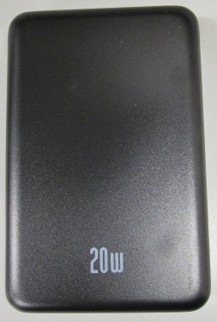
Power bank sold on Amazon recalled after 600 reports of fires and burns
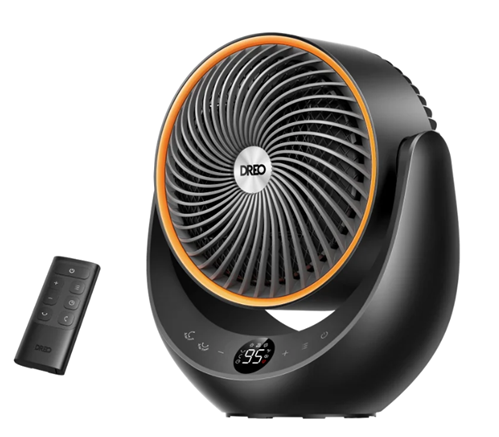
Dreo recalls 338,800 space heaters in the U.S. after reports of fires, burns