Opinion: Congress Has Voted Three Times to End the Iran War. It Still Hasn't Tried the Vote That Would Count.
The House has now passed three resolutions ordering an end to the war with Iran, each with more Republican support than the last, and none with any legal force. Until the House takes up the binding measure the Senate already passed, its dissent is symbolic by choice, not by necessity.
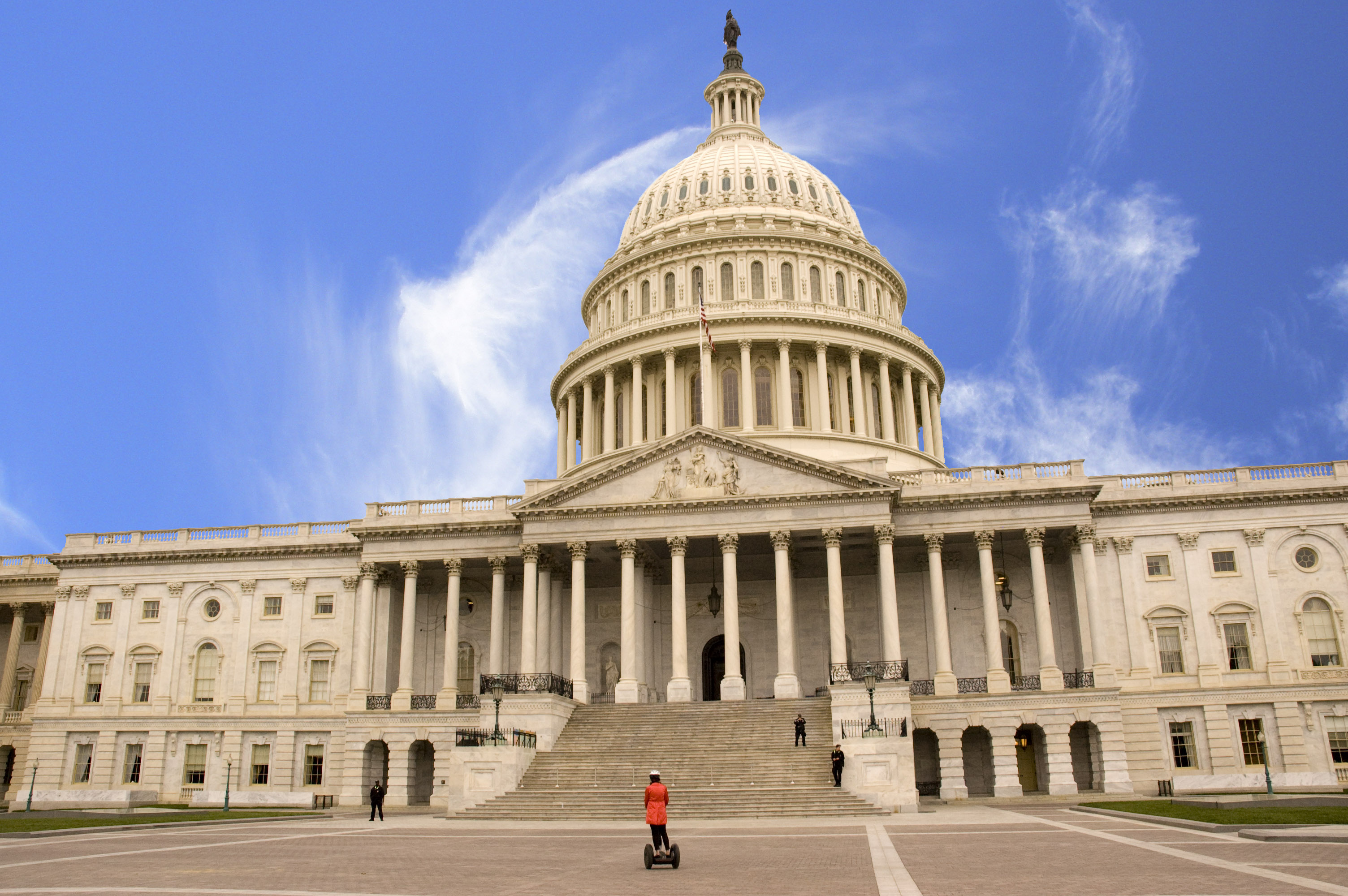
For the third time since June, the House of Representatives has voted to order an end to a war the United States is still fighting. On the night of September 15, lawmakers approved H. Con. Res. 93 by a margin of 220 to 204, directing President Trump to withdraw American forces from hostilities with Iran under the War Powers Resolution of 1973. Seven Republicans crossed over to join every voting Democrat, the largest defection yet in a string of votes that began in March. None of it has removed a single American service member from the region. That gap between congressional will and legal effect is not an accident of parliamentary procedure. It is the story of the vote itself, and it deserves more scrutiny than the ritual "rebuke to Trump" headline it keeps generating.
The war began on February 28, when American and Israeli forces launched a coordinated wave of strikes on Iranian nuclear and military sites, an opening salvo that killed Iran's supreme leader and dozens of officials. Iran retaliated against American installations and partner states across the Gulf. A ceasefire was announced in early April, but attacks continued past it, and by mid-September the conflict was still active enough that a House committed to ending it had already tried and failed twice before finally mustering a majority.
A Resolution That Resolves Nothing
What most coverage omits is that H. Con. Res. 93, like the two House measures before it, is a concurrent resolution. Under the Constitution's presentment clause, a concurrent resolution never reaches the president's desk and cannot become binding law; the House itself learned that lesson in 1983, when the Supreme Court's INS v. Chadha ruling cast doubt on using such resolutions to force presidential action at all. Passing it again and again lets members go on record, generate a news cycle, and change nothing.
The Senate took a different, more consequential path. On June 23 it passed S.J. Res. 59, sponsored by Senator Tim Kaine, by a vote of 50 to 48, with four Republicans joining Democrats. A joint resolution is a real bill: if the House passed identical text, it would go to the president, and he would have to sign it or formally veto it. The White House's own Office of Management and Budget made clear it was watching. In a Statement of Administration Policy, OMB said that if S.J. Res. 59 reached the president, "his advisors would recommend that he veto the joint resolution," on the grounds that it would improperly constrain his Article II authority as commander in chief. That is a real fight over a real bill. It is also, as the legal publication Lawfare has noted, the fight House leadership has so far declined to have, opting instead for repeat performances of a resolution that was never going anywhere in the first place.
Political Cover, Not Political Risk
This is the part worth sitting with. A concurrent resolution costs a member of Congress almost nothing. It lets a Republican from a competitive district tell voters back home that they opposed an unpopular war, without ever forcing a floor vote on the joint resolution that would actually test whether the House has the votes to send Trump a bill he would have to veto in his own name, in public, with his own signature. Voting three times for a measure with no legal force is not courage. It is theater with a fig leaf of constitutional language attached.
The strongest defense of this approach, made by members who have voted for all three House resolutions, is that symbolic votes still matter: they build a public record of opposition, put individual members on record ahead of the midterms, and, as legal analysts have argued, constitute "clear and compelling evidence of congressional opposition" that even the executive branch's own lawyers have acknowledged should weigh against further unauthorized action. There is something to that. A president who ignores three bipartisan floor votes against his war does so in the face of documented, repeated dissent, and that record matters for history and for any future legal challenge. But evidentiary value is not the same as constitutional accountability, and Congress has a much sharper tool sitting unused: the power of the purse. Nothing stops the House from attaching a binding funding restriction to a must-pass appropriations bill, the mechanism Congress actually used to end American involvement in Vietnam in 1973. That vote would carry real consequences for members, which is precisely why leadership in both parties has avoided it.
"By the Trump Administration's own metrics, Iran is winning and America is losing. Tonight, Congress did its job under the Constitution and said enough is enough. People at home are hurting because of skyrocketing costs, and our troops' lives are in danger in a war that never should have happened."
That was Representative Seth Moulton of Massachusetts, the resolution's sponsor, in a statement after the vote. It is a fair political argument. It is not, on its own, an argument for why the House keeps choosing a toothless vehicle over a binding one.
What the Growing Majorities Actually Show
- March 5: a House resolution to end the war fails.
- April 16: a second attempt fails.
- June 3: H. Con. Res. 86 passes, 215 to 208, with four Republicans in favor.
- June 23: the Senate passes the binding S.J. Res. 59, 50 to 48.
- September 15: H. Con. Res. 93 passes 220 to 204, with seven Republicans in favor, the largest crossover yet.
That trajectory tells a real story: opposition to an open-ended war is growing, not shrinking, inside a Republican conference that would normally defer to its own president on national security. That is precisely why the House's continued reliance on symbolic votes looks less like caution and more like avoidance. If seven Republicans are now willing to break with Trump publicly, the honest test of that sentiment is whether the House can pass the same binding language the Senate already has, send it to the president, and force him to put his veto on the record rather than letting the war continue by default because no bill ever arrived at his desk. NPR aptly called the Senate's own vote "symbolic" for the same underlying reason: without matching House passage of identical text, even a real joint resolution goes nowhere.
The Test That Actually Matters
Congress does not need a fourth non-binding resolution. It needs a floor vote, in the House, on the same text the Senate already approved, followed by whatever comes next: a presidential signature, ending the war by law, or a veto that every member who claims to oppose the war would then have to decide whether to override. Seven Republicans have now shown they will vote against their own president on a symbolic measure; the honest question is whether that number holds on a bill with consequences. Until the House actually forces that vote, the September 15 resolution and its predecessors are best understood not as Congress reclaiming its constitutional war power, but as Congress rehearsing the reclaiming of it, three times over, while American forces remain deployed against a country the House has now formally, and repeatedly, declared it wants no part of fighting. The next thing to watch is not another concurrent resolution. It is whether Speaker leadership ever schedules a vote on the joint resolution that would actually matter.

Opinion: The Fed Chair Trump Chose to Cut Rates Just Raised Them Instead
Opinion: The Layoffs Keep Coming, and "AI" Increasingly Isn't Even the Excuse

Opinion: Trump Wanted a Compliant Fed Chair. He May Have Gotten the Opposite.
