Opinion: The Supreme Court just made it harder for Washington to defund research it dislikes
By declining to hear the Trump administration's appeal over terminated research grants, the Supreme Court left standing a finding that the government likely punished scientists for their perceived views — a quiet ruling with real teeth.
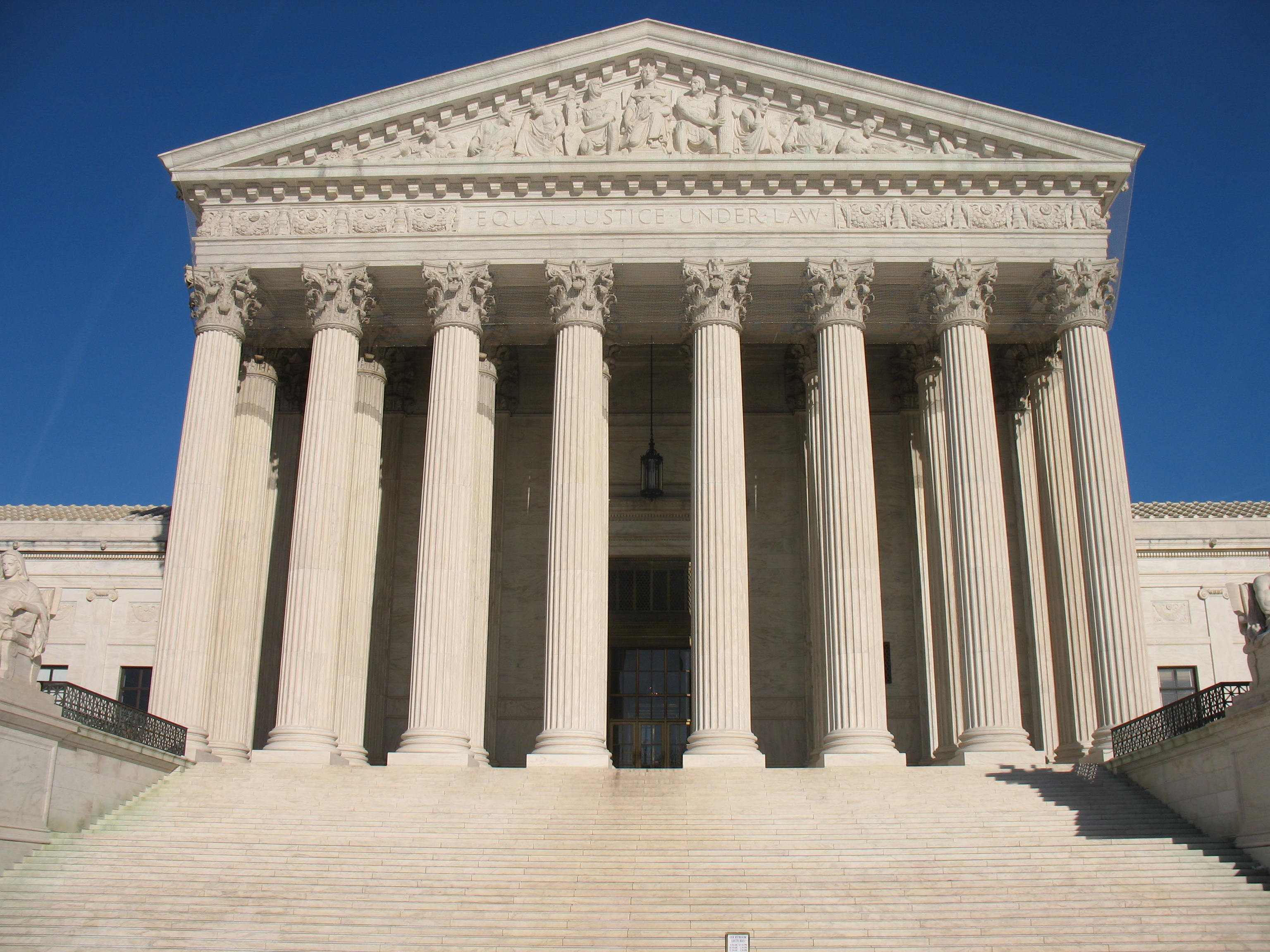
The Supreme Court did not write a single word to explain itself. On November 16 it simply declined to hear the Trump administration's appeal in a dispute over canceled federal research grants, leaving standing a lower-court finding that cuts to the heart of how this administration has tried to remake American science funding. The order, logged without comment or noted dissent on the court's own public docket, is easy to miss in a term crowded with louder fights. It should not be missed. The proposition this administration has tested in the lower courts — that it may cancel grants already awarded to scientists because officials dislike the subject matter those grants are associated with — has now failed twice on the merits, and the Supreme Court has just passed up its first chance to rescue it.
A quiet order with a specific history
The case, Trump v. Thakur, traces back to the opening days of the administration, when two executive orders directed agencies to purge "equity-related" federal spending: Executive Order 14151, published in the Federal Register as "Ending Radical and Wasteful Government DEI Programs and Preferencing," and a companion order on merit-based opportunity issued the following day. In April 2025, the Environmental Protection Agency and the National Endowment for the Humanities began sending form letters to grant recipients stating that their awards "no longer effectuate[d]" agency priorities and that funding was being "repurposed" in line with the administration's agenda. Among the recipients was Dr. Neeta Thakur, a pulmonary and critical-care physician at the University of California, San Francisco, whose roughly $1.3 million EPA grant to study how wildfire smoke harms vulnerable communities was terminated with no individualized explanation.
Thakur and several colleagues sued, and a federal judge in San Francisco, Rita Lin, issued a class-wide preliminary injunction in June 2025 ordering several agencies to reinstate the grants. She certified two groups of plaintiffs: researchers who got only a vague form letter, and researchers whose terminations were explicitly tied to diversity, equity and inclusion or "environmental justice." The government appealed and asked the U.S. Court of Appeals for the Ninth Circuit to stay the injunction. It refused. What the panel wrote next is the real substance of this story.
What the government did not even dispute
In an order denying the stay, a three-judge Ninth Circuit panel found that the government was unlikely to prevail on its claim that the grant cancellations were lawful, because they amounted to viewpoint discrimination. The panel noted that officials did not dispute why the grants were cut — the government's own position was that it terminated the awards because they promoted DEI, DEIA or environmental justice.
The government, the court held, cannot "leverage its power to award subsidies on the basis of subjective criteria into a penalty on disfavored viewpoints" or "aim at the suppression of dangerous ideas" in the provision of subsidies.
That finding on the DEI-related class survived into the Ninth Circuit's later ruling on the full appeal, issued in May 2026, which affirmed the injunction as to those grants while narrowing it for the group that had received only generic form letters. It is that May 2026 judgment the administration asked the Supreme Court to review, and that the justices, on November 16, declined to touch.
The Thakur litigation is a narrow slice of a much larger campaign. According to reporting by CalMatters, agencies terminated more than $900 million in grants to University of California researchers alone between January and July of last year, nearly $600 million of it at UCLA, in a process that reportedly involved keyword searches of grant files for terms such as "diversity" and "climate change." That summer, the administration moved to formalize this approach governmentwide, directing in an August 2025 executive order that senior political appointees personally review federal grants and terminate those no longer aligned with administration priorities. Almost all of the UC grants were eventually restored under court order, and a separate hearing over Department of Energy terminations — reportedly including cuts to grants in states that voted for Kamala Harris in 2024 — was set to proceed independently of the Supreme Court's action.
A serious argument, and why it falls short here
The administration's position deserves engagement rather than dismissal, because it rests on a real doctrine. The government is not obligated to fund every proposal; it may define the scope of its own programs, and the Supreme Court has upheld funding conditions that shape what grant recipients do with federal money, most famously in cases over federally funded family-planning counseling. A president who campaigned on dismantling diversity-related federal programs can argue that redirecting discretionary research dollars away from DEI-themed projects is ordinary executive priority-setting, not retaliation.
What undercuts that argument here is timing. The precedents the administration leans on concern prospective program design — rules announced before money changes hands and applied evenhandedly to future applicants. This case involved multi-year grants already competitively awarded and already under way, pulled back mid-term because reviewers flagged particular words in existing paperwork. The government's own admission that it canceled the awards because of what they promoted, rather than any failure of performance, is what makes this look like punishment for viewpoint rather than a change in funding priorities. It is also fair to note what the Supreme Court's denial does not do: it sets no nationwide precedent, resolves no question on the merits, and leaves the underlying injunction preliminary rather than final. As Axios reported, the Justice Department has signaled it intends to keep contesting the case in the lower courts. The administration lost a chance to short-circuit that litigation early. It did not lose the underlying fight.
A check that still has teeth
What makes November 16 worth marking is what it says about institutional restraint. This is a Supreme Court with a six-justice conservative majority that has, in other contexts this term, given the administration considerable latitude over personnel and agency structure. On this question it declined an invitation to intervene on the government's behalf, leaving intact an appellate finding that mass, viewpoint-based cancellation of already-awarded research grants is likely unconstitutional. Federal science funding depends on a basic premise: that once the government has run a competition and chosen a winner, it will not reach back in because it has belatedly decided it dislikes what the winning idea is associated with. If a keyword flag is enough to unwind a multi-year grant, no researcher's funding is secure against whatever list of disfavored topics the next administration draws up. The Ninth Circuit called that what it is. By its silence, so, for now, has the Supreme Court. Congress and future administrations should take the signal seriously: the First Amendment does not go on holiday merely because the check being written is the government's own.

Opinion: Losing measles elimination status is a real failure, not a footnote

Opinion: Netanyahu's push for a "unity government" is a bid to undo an election he lost

Opinion: Trump's summit with Xi and Putin should not shut Ukraine out of the room
