Voyager 1 Set to Become First Human-Made Object One Light-Day From Earth
NASA's 49-year-old probe will cross a distance of roughly 16 billion miles early Wednesday, a gap so vast that a radio signal now takes a full day to make the one-way trip.
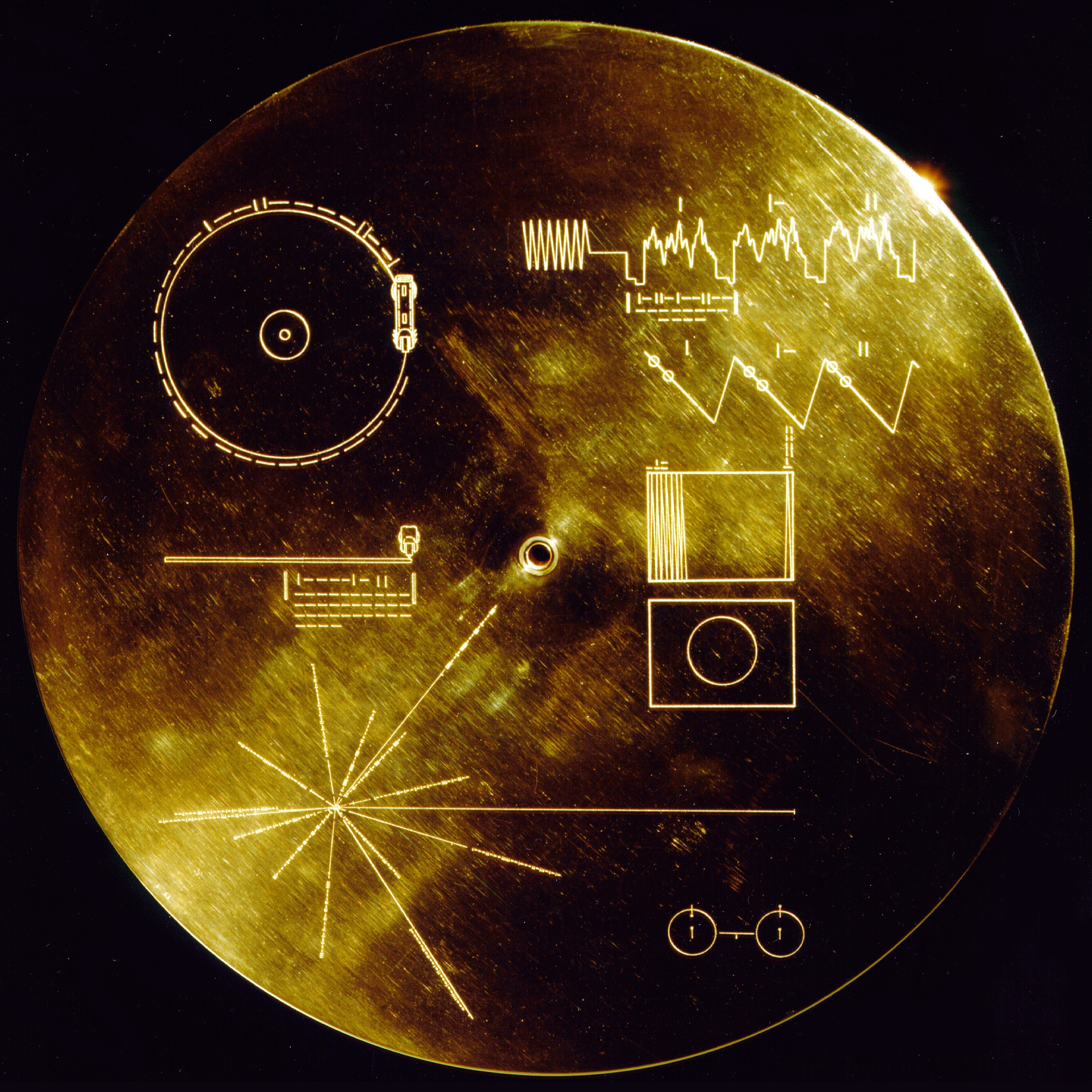
Nearly 49 years after its launch, Voyager 1 is about to pass a threshold no human-made object has reached before: one light-day from Earth. NASA says the spacecraft will cross that mark at 5:16:07 a.m. EST on Wednesday, a distance of 16,094,799,096 miles (25,902,068,356 kilometers) — the span light itself travels in 24 hours.
Voyager 1 launched on Sept. 5, 1977, two weeks after its twin, Voyager 2, and has been traveling at nearly 38,000 mph ever since. It entered interstellar space in August 2012 and remains the most distant human-made object in existence, still returning data to mission controllers at NASA's Jet Propulsion Laboratory despite its aging power supply. At its current distance, a radio signal sent from Earth takes a full day to reach the spacecraft, and any reply takes another full day to return — meaning a round-trip conversation with Voyager 1 now takes 48 hours.
A Worldwide Light Show
To mark the milestone, NASA is running a public campaign called "Shine Bright for Voyager's Light-Day" on Tuesday evening, asking people around the world to point a flashlight, phone light, glow stick or bike light skyward after sunset and blink the Morse code for the letters "V-G-R" — Voyager's call sign. NASA has also built an automated version that flashes the sequence from a phone or tablet browser, and is inviting participants to post photos or video to social media. The agency frames the gesture as an echo of the Golden Record each Voyager spacecraft carries, which includes greetings, sounds and images of Earth along with a Morse-coded inscription reading "Ad astra per aspera" — Latin for "through struggle to the stars." The record's contents, selected by a committee led by astronomer Carl Sagan, also include whale songs, a Bach prelude and Chuck Berry's "Johnny B. Goode" alongside the spoken greetings, a mix intended to represent the diversity of life and culture on Earth to any finder capable of decoding it.
Coverage of the campaign has spread well beyond NASA's own channels. Popular Science detailed how to take part, and IFLScience noted the symbolic, rather than literal, nature of the gesture — no flashlight beam will actually reach the spacecraft, which is now roughly 172 times farther from the sun than Earth is. EarthSky's write-up of the milestone noted that Voyager 2, traveling a slightly different trajectory at a slower pace, will not reach its own one-light-day mark until November 2035.
Still Listening, After Nearly 50 Years
NASA continues to track both Voyager probes through its real-time mission-tracking page, which shows each spacecraft's current distance and velocity. Mission engineers have spent recent years selectively powering down non-essential instruments to conserve the declining output of Voyager 1's plutonium power source, hoping to keep at least some science instruments operating into the 2030s. The mission's own blog has chronicled that slow wind-down alongside milestones like Tuesday's, framing the light-day crossing as both a triumph of 1970s engineering and a reminder of how much farther the spacecraft has left to travel before it reaches the edge of the solar system's outer boundary, the Oort Cloud, a passage expected to take roughly 300 years.

Astronomers trace mysterious eight-minute radio pulses to a white dwarf orbiting a sun-like star

Europe's Hera Probe Sends Back First Close-Up Images of Asteroid DART Deliberately Struck

Thousands of tiny animals found living inside deep-sea mining's target rocks
