Photonic chip combines starlight from two telescopes in milestone test at California observatory
A glass chip just centimetres across has combined starlight from two of the CHARA Array's six telescopes on Mount Wilson, the first real-sky demonstration of a technology its developers hope will make future high-resolution telescope arrays smaller, cheaper and easier to upgrade.
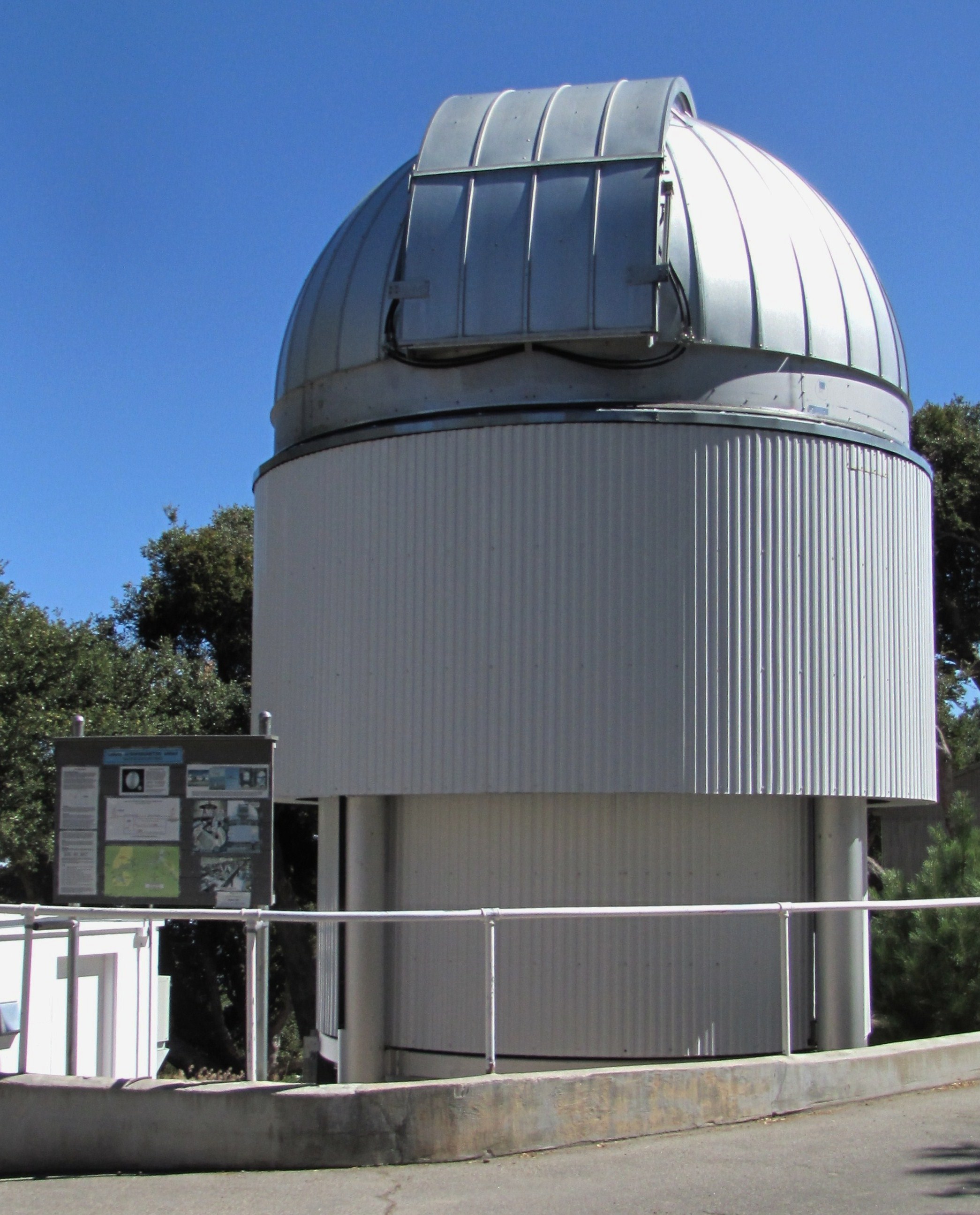
A chip of glass small enough to sit on a fingertip has combined starlight gathered by two separate telescopes so precisely that, to the instruments reading it, the light behaved as though it came from a single, much larger telescope. The demonstration, carried out at a six-telescope observatory on Mount Wilson in California and described in a paper published this week, is the first time this particular kind of chip-based light combiner has been tested on real starlight rather than in a laboratory.
The chip was developed by engineers at Heriot-Watt University in Edinburgh, who used ultrafast lasers to inscribe light-guiding channels directly into a block of specialised glass, in much the same way that circuits are etched into a silicon microchip. Installed inside a testbed instrument called CHARIOT, the chip took the place of the mirrors, lenses and optical fibres that normally have to be precisely aligned to merge beams from separate telescopes, a job that conventionally fills the better part of a room.
What the observations showed
The test took place at the CHARA Array, an optical and infrared interferometer of six telescopes spread across Mount Wilson and operated by Georgia State University, during observing runs in 2024 and 2025. Researchers fed starlight from two of CHARA's telescopes through the chip and recorded the resulting interference pattern, known as fringes, the signature that confirms two beams of light are being combined coherently.
According to the paper, published online in the Monthly Notices of the Royal Astronomical Society and formally appearing in the journal's October print issue, the chip-based instrument measured the brightness signal needed for interferometry, called squared visibility, to better than one percent precision for stars brighter than roughly second magnitude in infrared light. Under conditions of poor to moderate atmospheric seeing, the faintest star for which the team still detected usable fringes was catalogued as HD 210824, at a magnitude of about 5.2 in the same infrared band. The authors describe that performance as broadly comparable to JouFLU, the older fibre-based instrument the chip is intended to succeed, and say they expect further engineering to extend both the faintest stars it can reach and its measurement precision.
- Instrument: CHARIOT, a swappable photonic testbed built into the CHARA Array
- Telescopes combined in this test: two of CHARA's six, on Mount Wilson, California
- Precision achieved: squared visibility measured to sub-1 percent for stars up to about magnitude 2
- Faintest star with detected fringes: HD 210824, at roughly magnitude 5.2
Why combining telescopes is hard
A single telescope's ability to resolve fine detail is limited by its mirror size. Astronomers get around that limit with interferometry: pointing several separate telescopes at the same star and combining their light so precisely, down to a fraction of a wavelength, that the array behaves as one telescope as wide as the distance between the farthest instruments. CHARA's telescopes, for instance, are spread across distances of up to 330 metres, giving it resolving power far beyond any single mirror of that size could achieve on its own.
Achieving that combination has traditionally meant routing starlight through long tunnels of mirrors and motorised delay lines that compensate, to extraordinary precision, for the fact that light from a star reaches each telescope at a very slightly different time. Integrated photonics compresses much of that machinery into a solid chip, an approach already proven at a larger scale by the European Southern Observatory's GRAVITY instrument, which uses a photonic chip to combine light from four telescopes at the Very Large Telescope Interferometer in Chile. The Heriot-Watt team's contribution is a chip built for CHARA's wavelength range and designed, unlike a fixed instrument, to be swapped out within hours so that rival combiner designs can be tested back to back on the same sky.
Who stands to benefit
The immediate beneficiaries are interferometrists, the relatively small community of astronomers who use arrays like CHARA to measure the physical sizes, shapes and surface features of nearby stars, track the orbits of binary star systems, and in some cases characterise the stars that host known exoplanets, work that depends on resolving detail too fine for any single telescope. A cheaper, smaller, more reliable way of combining telescope beams would make it less costly to add more telescopes to existing arrays or to build new ones, and could eventually matter for proposed space-based interferometers, which have far stricter limits on the size, weight and power of the equipment they can carry.
"This is a significant milestone for a research programme that began more than 15 years ago. We have shown that much of that work can instead be carried out by a glass chip only a couple of centimetres in size."
The quote is attributed to Robert Thomson, a professor at Heriot-Watt's Institute of Photonics and Quantum Sciences who co-developed the chip with his colleague Aurélien Benoît. Aline Dinkelaker of the Leibniz Institute for Astrophysics Potsdam, the paper's lead author, said in the same university announcement that "demonstrating this technology under real observing conditions is an important step forward," distinguishing the on-sky test from the laboratory characterisation work the collaboration, which also includes researchers at the University of Cologne and at CHARA itself, had published previously.
What comes next
The paper is described by its authors as the first in a planned series documenting CHARIOT's on-sky performance. The team has said it intends to push the design toward combining light from more than two telescopes at once, which would bring the chip closer to matching the full capability of CHARA's six-telescope array, and to keep refining the glass channels to reach fainter, more distant stars. Because CHARIOT was built specifically to let different photonic chips be swapped in and tested under identical conditions, the Heriot-Watt device is likely to be only the first of several competing designs to be put through the same on-sky trial in the coming observing seasons, with the CHARA Array's operators expected to continue offering telescope time to photonics groups testing new hardware.
NASA's TRACERS satellites find Earth's magnetic shield breaks open in shifting spots, not shifting intensity
Astronauts complete 100th U.S. spacewalk, install station's seventh new solar wing
