Scientists identify a third way bacteria breach the body's protective cell barriers
A study in Nature Communications finds that oral bacteria can loosen the seal between cells by relocating two junction proteins rather than destroying them — a mechanism researchers say helps explain how gum infections contribute to diabetes, arthritis and heart disease elsewhere in the body.

Researchers at the University of Pennsylvania School of Dental Medicine and Georgetown University have described a previously undocumented way that bacteria weaken the layer of cells that seals off the inside of the body from the microbial world outside it. The finding, published this week in Nature Communications and first reported by Phys.org, identifies a signaling pathway that loosens the bonds between cells without destroying the proteins that hold them together.
The study, titled "Non-canonical FOXO1 signaling governs epithelial barrier integrity", was led by Stella Alimperti of Georgetown's Department of Biochemistry and Molecular and Cellular Biology and Dana T. Graves, a periodontics professor and vice dean for scholarship and research at Penn. Scientists had previously described two ways bacteria break through epithelial barriers: by enzymatically degrading the junction proteins that act as cellular glue, or by shutting down the genes that produce them. The new work, three years in the making, lays out a third route that does neither. Eleven researchers from the two institutions are listed as authors, with Alimperti as the lead author and Graves as senior author.
A protein relocation, not a demolition
The team found that bacterial exposure activates FOXO1, a stress-sensing transcription factor, prompting it to move into the cell nucleus. That shift sets off a chain of events that pulls two junction proteins, E-cadherin and beta-catenin, away from the cell membrane and into the cell's interior. Within a few hours of exposure, the proteins have relocated — not been destroyed — and the links between neighboring cells weaken as a result.
The sequence was observed first in cultured cells and then confirmed in mice exposed to oral bacteria, where imaging showed FOXO1 moving into the nucleus of oral tissue cells. The authors describe the pathway as "non-canonical," meaning it falls outside the two mechanisms the field had assumed were the only options.
"What is particularly exciting is that bacteria do not need to destroy the machinery that holds the cells together," Graves said.
Graves has also described the broader implication in blunter terms, telling Phys.org that "the oral cavity is a gateway" and that "oral health is systemic health" — framing gum tissue as one of several thin, high-traffic borders, alongside the gut and lungs, where a breach can let bacteria slip into the bloodstream.
Years of federal funding behind the result
The work grew out of a National Institutes of Health research grant titled "Regulation of Epithelial Barrier," which has backed Alimperti and Graves's collaboration since 2021, when the American Dental Association's science institute first announced the award alongside Penn Dental Medicine. The roughly $2.3 million project set out to examine how mechanical pressure and bacterial signals affect the positioning of FOXO1, E-cadherin and beta-catenin in gum tissue — the same three molecules at the center of the new paper. The grant's stated aims were periodontitis and peri-implantitis, the inflammatory conditions that destroy gum tissue and bone around teeth and dental implants. Peri-implantitis has become a growing clinical concern as dental implants have become more common, since a failed seal around an implant can let bacteria reach bone in a way healthy gum tissue would otherwise prevent.
That funding record matters for judging the claim: the pathway reported this week is not a one-off laboratory curiosity but the product of a federally reviewed, multi-year research plan, carried out jointly by a dental school lab and a basic-science department at a separate university.
Why a gum problem might reach the rest of the body
Periodontal disease is not a niche condition. The National Institute of Dental and Craniofacial Research reports that roughly two in five American adults have some form of it, based on survey data collected from 2009 to 2014. Once the epithelial barrier in the gums fails, oral bacteria and their byproducts can enter circulation. The researchers tie that leakage to several conditions that extend well beyond the mouth: flare-ups of rheumatoid arthritis, elevated blood glucose in people with diabetes, and, more tentatively, worsened cardiovascular disease and dementia. The same barrier-breaching logic, the authors note, is not unique to gum tissue; comparable epithelial seals line the gut and the lungs, where bacterial leakage has been linked to similar systemic effects. Because FOXO1, E-cadherin and beta-catenin are present in epithelial tissue throughout the body, the researchers suggest the same relocation mechanism could, in principle, apply well beyond the mouth, though the current paper tested it only in oral tissue.
The paper does not claim to have found a drug, a therapy or a clinical trial. Its contribution is mechanistic: a roadmap showing which molecular switch to target if a future treatment aims to keep the barrier intact despite bacterial attack, rather than trying to kill the bacteria outright or regrow damaged tissue after the fact.
What comes next
Graves has pointed to the speed of the effect as one of the study's more unexpected findings, noting that the barrier's integrity can be lost within hours of bacterial exposure — faster than many existing models of chronic gum disease progression would suggest. That timeline raises a practical question for follow-up research: whether interventions aimed at keeping FOXO1, E-cadherin and beta-catenin anchored at the cell membrane, rather than at killing bacteria, could slow or prevent the early stages of barrier breakdown in periodontitis, peri-implantitis, or analogous conditions in the gut and lungs.
The authors have not published results from human trials testing that idea, and the current NIH grant funding the collaboration is set to conclude in 2026. Whether a follow-up grant or a therapeutic candidate emerges from the finding is, for now, an open question the paper leaves to future work.
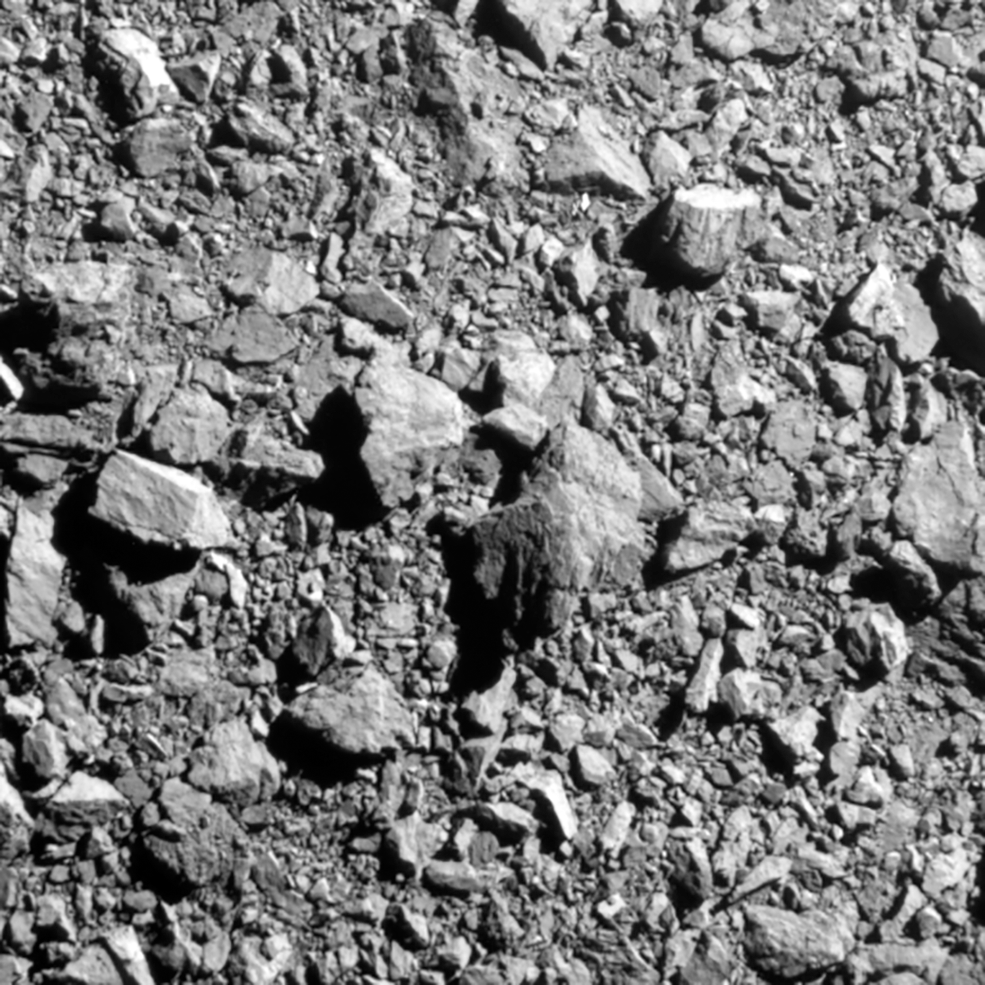
Europe's Hera Probe Sends Back First Close-Up Images of Asteroid DART Deliberately Struck

Thousands of tiny animals found living inside deep-sea mining's target rocks

Scientists May Have Solved the 40-Year Mystery Behind Uranus and Neptune's Lopsided Magnetic Fields