Army to detonate decades-old explosive stockpile at Iowa plant, evacuating nearby homes
The U.S. Army plans two controlled detonations Friday to destroy 68 barrels of unstable lead azide at its ammunition plant in Middletown, Iowa, asking dozens of households to leave as officials model a lead-dust plume reaching toward the Quad Cities.
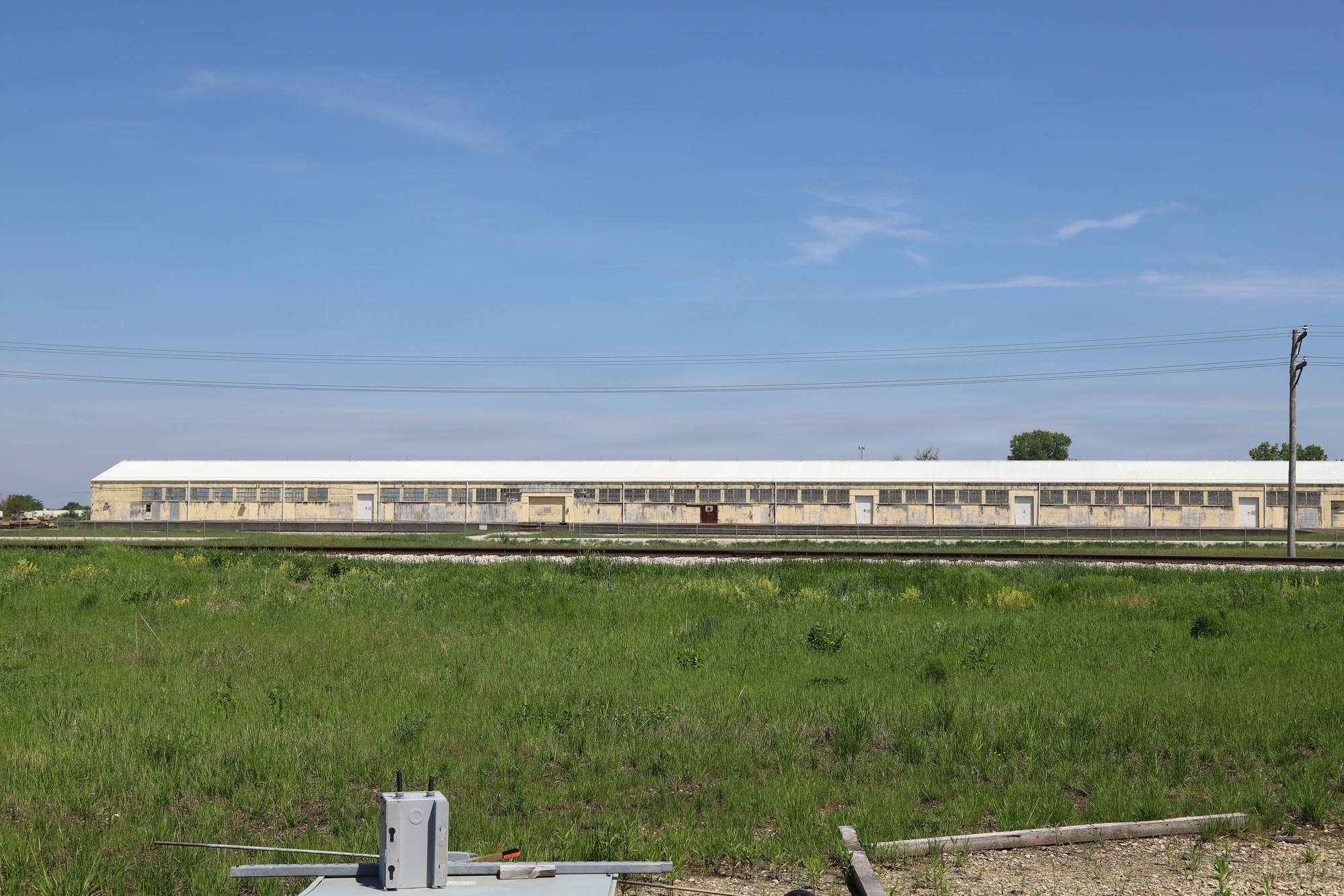
The U.S. Army will carry out two controlled detonations on Friday at the Iowa Army Ammunition Plant to destroy 68 barrels of degraded lead azide, an unstable explosive compound that officials say has become too dangerous to move after nearly two decades in storage. The Army is asking residents near the plant, in the small Des Moines County community of Middletown, to leave their homes for the morning while the blasts take place, and air-quality modeling shows the resulting dust plume could carry trace lead particles across a stretch of the Mississippi River valley stretching roughly 20 miles, from near Burlington to north of the Quad Cities.
The detonations are scheduled for approximately noon local time, with an evacuation window running from 8 a.m. to 2 p.m., according to a public advisory posted by Army Sustainment Command. The advisory recommends that residents of the Middletown City Park neighborhood temporarily leave the area "out of an abundance of caution" because of the possibility of localized window damage from the blasts, and it directs them to a shelter at the Armed Forces Reserve Center on Highway 34, which the Army says will have refreshments, a gym and classrooms open to families and their pets.
A compound that grew more dangerous with age
Lead azide is a primary explosive once kept on hand at the plant for use in detonators and initiators for ammunition production. According to officials, the material sat untouched in two earth-covered storage magazines for nearly 20 years after the Army stopped needing it, and over that time it began to recrystallize, a process that made it increasingly sensitive to friction and shock. Once the Army determined it no longer had a production use for the stockpile, the material was reclassified as hazardous waste, which put its handling under the federal Resource Conservation and Recovery Act rather than the plant's normal munitions-storage rules.
"There are 68 barrels of lead azide in two earth-covered magazines, and that material was on site for potential production," Justine Barati, deputy director of public affairs for Army Sustainment Command, told Business Insider in October. "When we realized that we would no longer need that material or use that material, then it becomes hazardous waste."
Barati said a team of explosives specialists recommended a controlled detonation rather than attempting to move or chemically treat the material, and that the decision was elevated to then-Army Secretary Dan Driscoll for final approval. Army Explosive Ordnance Disposal teams are expected to carry out Friday's blasts.
"The safety of our personnel, the surrounding community, and the environment is our absolute top priority," Lt. Col. Daniel V. Nosse, the plant's commander, said earlier this year as the Army sought regulatory approval to keep storing the material.
Evacuations, shelter and lead-exposure monitoring
About 55 homes are expected to be within the zone most directly affected by Friday's detonations, officials have said, and residents who agree to leave have also given the Army permission to test their properties for contamination before and after the blasts. The Army says it will sample air, soil and water in the surrounding area, both ahead of the detonation and afterward, and that residents whose homes are damaged can file property claims once the operation is complete.
For people living farther out, within the wider zone where modeling shows lead particles could settle on the ground, an area extending up to 10 miles from the plant, officials are not recommending evacuation but are advising residents to stay indoors during the detonation window, close windows and doors, and set heating and cooling systems to recirculate rather than draw in outside air. After the Army declares the exposure period over, it is advising people in the area to wipe down outdoor surfaces such as windowsills and children's play equipment, and to consider washing any vehicle that was parked outside. The Army has said it will post updated plume-forecast maps in the days, hours and finally minutes before the detonation, followed by a final estimate of the affected area once the operation concludes, according to a report from Tri States Public Radio, which first detailed the scope of the projected plume.
A plant already under regulatory scrutiny
The Iowa Army Ammunition Plant is a 19,127-acre, Army-owned, contractor-operated facility that has been on the federal Superfund list since 1990 because of decades of soil and groundwater contamination tied to munitions production dating to World War II, according to a site summary maintained by the Iowa Department of Natural Resources. The lead azide stockpile is a separate, more recent problem: the plant first disclosed the material's hazardous-waste reclassification last winter, closed temporarily from March 12 to March 30 for what the Army's Joint Munitions Command called a "proactive safety review," and has since operated under a series of short-term emergency storage permits from the Environmental Protection Agency while it worked out a permanent disposal plan.
The plant's environmental compliance record drew separate scrutiny two years ago, when the EPA fined the Army and its operating contractor, American Ordnance LLC, $39,311 for mishandling explosives waste, including detonating material in an improperly configured chamber and burning munitions in open pans beyond what its hazardous-waste permit allowed. That penalty was unrelated to the lead azide now set for destruction, but it is part of the same regulatory relationship under which the EPA is now overseeing Friday's disposal.
In July, the Army secured an extension of its emergency storage permit while continuing to search for a long-term solution, a step announced through the Defense Department's official news distribution service. "Securing this permit extension allows us to maintain the highest safety and regulatory standards," Nosse said at the time, adding that "the U.S. Army is committed to following the environmental regulations" as it worked toward a permanent fix. Friday's detonation appears to represent that permanent fix, rather than another extension of the storage arrangement.
What happens next
The timing is notable because the plant is in the midst of a construction push elsewhere on its grounds. Earlier this year the Army broke ground on a new production line for 155mm artillery shells at the Middletown site, intended to replace a World War II-era line and expand the United States' capacity to manufacture large-caliber ammunition after the Pentagon drew down stockpiles to supply Ukraine. Officials have said work on that project, which sits on the opposite side of the roughly 30-square-mile facility, is expected to pause for about four hours on the day of the detonation, but is not otherwise affected by the lead azide disposal.
Middletown itself is a city of a few hundred residents in rural southeastern Iowa, and the broader evacuation and air-quality advisories touch a wider swath of Des Moines County and neighboring areas along the Mississippi River, including parts of Illinois across the river from Burlington. The Army has said the detonation will be visible and audible to residents well beyond the immediate evacuation zone, producing noise and ground vibration from the two rapid blasts in addition to the dust plume.
Local and state emergency management officials, along with first responders and elected officials, have been coordinating with the plant in the lead-up to Friday, though none has issued a public statement separate from the Army's own advisories. Once the detonations are complete, the Army is expected to issue a final assessment of which areas saw elevated lead levels, information that will determine the scope of any additional cleanup, soil testing or compensation for residents. For now, the plant's message to the surrounding community has been to prepare for a short, disruptive morning, leave if asked, and wait for confirmation that the air is clear before returning to normal activity.
St. Johns River flooding breaks records near Cocoa as Florida's slow-motion flood disaster drags on

Tanker's steering failure capsized a New Orleans riverboat; now a legal and safety reckoning follows

Judge Again Blocks Trump Plan to Close Washington Golf Course, Opens Ethics Inquiry
