United States loses measles elimination status after 26 years
The Pan American Health Organization said Tuesday that sustained outbreaks in Pennsylvania, Wisconsin and other states have kept measles circulating for more than a year, ending a designation the country held since 2000.
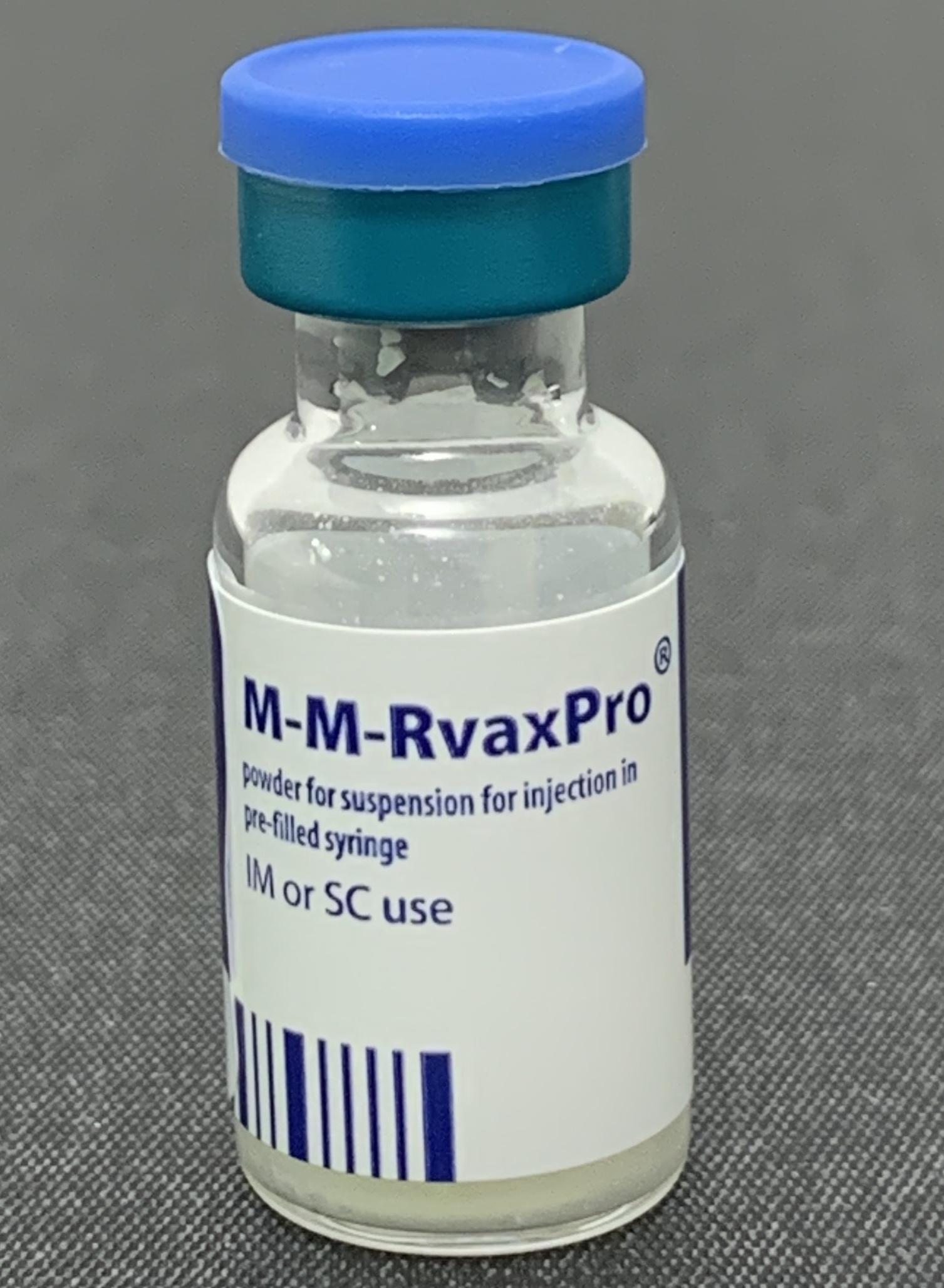
The United States has lost its measles elimination status, the Pan American Health Organization said Tuesday, ending a 26-year run in which the country had kept the virus from taking permanent hold despite periodic outbreaks. The designation, held since 2000, is a formal public-health status awarded by the World Health Organization's regional body for the Americas, and its loss means the agency's reviewers concluded that measles has been circulating continuously inside the country for more than a year rather than arriving in isolated, stamped-out clusters.
The determination followed a closed-door meeting of PAHO's Regional Verification Commission in Washington, D.C. from November 10 to 13, which examined genetic sequencing data tracing a single viral lineage back to an outbreak that began on January 20, 2025. Under WHO criteria, a country forfeits elimination status once a genotype keeps spreading, uninterrupted, for 12 months or longer, regardless of whether overall case counts are falling, as NBC News explained in its report on the decision.
A year of record case counts
The scale of the current outbreak year makes the finding unsurprising to most public health officials who have tracked it. The CDC's own case count, updated November 13, shows 5,412 confirmed measles cases in 2026 across 47 jurisdictions — more than double the 2,289 cases recorded in all of 2025 and the highest annual total since 1991, before the current two-dose vaccine schedule was standard. Ninety-six percent of this year's cases are linked to one of 43 identified outbreaks, and the CDC says 96 percent of infected people were unvaccinated or had unknown vaccination status; only about 2 percent had received the full two-dose MMR series.
State health departments have reported considerably more deaths than the CDC's own dashboard currently shows. The agency lists six measles-associated deaths for 2026, a figure it describes as "subject to change," but Pennsylvania alone has confirmed seven deaths this year, and Wisconsin and New York have each confirmed at least one more. Tallied from the start of the outbreak period in January 2025, KFF Health News reported 13 measles-related deaths disclosed by states and more than 830 hospitalizations over two years — a gap researchers attribute partly to differences in how states and the CDC classify a death as measles-associated.
Outbreaks concentrated in a handful of states
Three states account for most of the recent toll. Pennsylvania's health department has recorded 1,542 cases across 46 counties this year, with 305 hospitalizations; Lancaster County, home to a large Amish and Mennonite population with historically lower vaccination rates, accounts for roughly a third of the state's cases. Gov. Josh Shapiro has said the outbreak is not confined to any single community and declined an offer of federal health staff from HHS Secretary Robert F. Kennedy Jr., saying the state's own health department could manage the response.
Wisconsin health officials have confirmed roughly 649 cases across 20 counties, concentrated in a southwestern cluster spanning Grant, Lafayette, Iowa and Vernon counties, where kindergarten MMR vaccination rates run around 85 percent — well below the 95 percent threshold epidemiologists say is needed to block sustained spread. Two children have died there, the state's first measles deaths since 1990. New York reported its own first measles-associated death in more than 30 years on November 2, a child in rural Lewis County, prompting Gov. Kathy Hochul to declare a state disaster emergency the following month.
- 5,412 confirmed U.S. measles cases in 2026, more than double 2025's total
- 43 outbreaks accounting for 96 percent of this year's cases
- At least 10 measles-related deaths reported by state health departments in 2026
- 96 percent of cases involved people who were unvaccinated or had unknown status
"It's a very sad moment," said Anne Schuchat, a former CDC deputy director who was not involved in PAHO's review. "Having top leadership disseminating rumors, disinformation and flat-out falsehoods has been unforgivable."
A measured response from federal health officials
Reaction to the announcement split along now-familiar lines. CDC Director Erica Schwartz, confirmed to the post in August, told CBS News that "the measles elimination designation is not what protects Americans" and that the agency "remains focused on stopping outbreaks," pointing to roughly $100 million in federal support sent to state and local health departments this year. Secretary Kennedy said the department would work to regain elimination status and continues to recommend the MMR vaccine, attributing the resurgence in part to "COVID-era disruptions" in routine childhood vaccination and noting that Canada lost its own elimination status a year earlier.
Other scientists were more pointed. Paul Rota, a former CDC microbiologist who spent decades studying measles virology, compared the outbreak dynamics to a wildfire: "Bigger fires create more embers, and any one of those embers can seed another fire." Dorit Reiss, a vaccine-policy researcher at UC Law San Francisco, said simply that "something that normally happens isn't happening" — the routine containment of imported cases before they can take root. Sen. Bill Cassidy of Louisiana, a physician and the Senate's senior Republican voice on health policy, said officials needed to do more to promote vaccination, warning that unvaccinated adults and children put more vulnerable people at risk of complications that can include pneumonia and brain swelling.
What comes next
Regaining elimination status is not a quick fix. PAHO's criteria require a country to stop all transmission traceable to existing outbreaks and sustain that for a full year before reviewers will restore the designation, along with documented vaccination coverage above 95 percent, sensitive disease surveillance and rapid outbreak-response capacity. HHS has said it will push to close vaccination gaps and issue new clinical guidance to help providers diagnose and treat measles cases more quickly, though it has not set a target date for seeking the status back.
Much of what happens next will be decided well away from Washington, in state capitols. Most state legislatures reconvene in January, and several, including Idaho and Texas, loosened school vaccine exemption rules over the past two years amid the outbreaks rather than tightening them. CBS News medical correspondent Dr. Céline Gounder has noted that any further erosion of exemption laws in the coming session could make a durable recovery of elimination status harder, and has warned that sustained domestic transmission raises the possibility that the United States could begin exporting measles cases to countries that have kept the virus eliminated, including, in the recent West Texas outbreak, cases that spread across the border into Mexico.
For families, the practical guidance from health officials has not changed: the measles-mumps-rubella vaccine is roughly 97 percent effective after two doses, and the loss of elimination status does not itself change recommended vaccination schedules or raise the risk to anyone who is fully immunized. But with cases still being confirmed in new counties each week and winter travel season approaching, officials in the hardest-hit states say they expect the national case count, already the highest since 1991, to keep climbing before it falls.
CBS News — U.S. officially loses measles elimination status: "What a tragedy"
NBC News — U.S. loses measles-elimination status, erasing decades of progress
KFF Health News — US Has Lost Measles Elimination Status, Global Health Authorities Say
Al Jazeera — US loses measles-free status as two more deaths reported

Flash fire burns three workers at nation's largest lithium plant in North Carolina

Explosion and Toxic Geyser at Troubled California Landfill Hospitalize Six, Prompt Evacuation Advisory

Tennessee taps pardoned ex-inmate to lead prison system in crisis
