France and Malaysia sign rare earths and defence deals in new strategic partnership
President Emmanuel Macron's first visit to Malaysia since 2017 produced a joint rare earths processing venture, a defence industrial roadmap and seven cooperation agreements, as Paris looks beyond China for critical minerals.
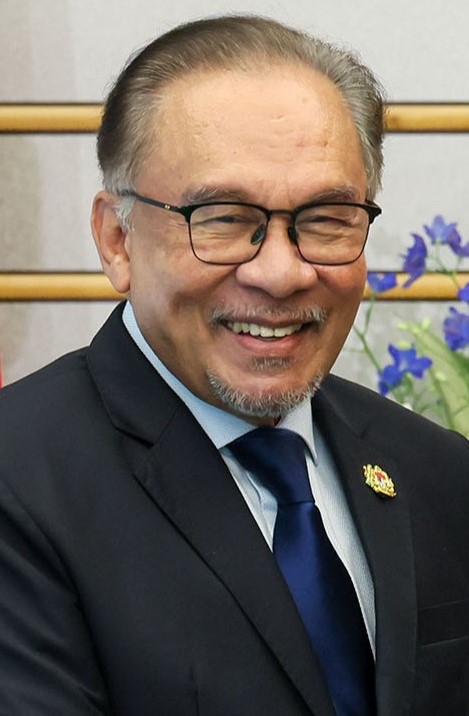
France and Malaysia agreed on Tuesday to raise their bilateral relationship to a "strategic partnership," signing seven cooperation documents covering rare earth minerals, defence, energy and digital technology during President Emmanuel Macron's first visit to Malaysia since he took office in 2017.
Macron held talks with Prime Minister Anwar Ibrahim in Kuala Lumpur on the second day of a two-day official visit, the final stop on a Southeast Asian trip that began with a state visit to Cambodia and the Francophonie Summit in Phnom Penh. The two governments published a joint declaration on the strategic partnership, which the two sides called a historic step in relations dating back to 1957.
A rare earths deal built around an exception to Malaysia's export ban
The centerpiece agreement links French rare earth processing specialist Carester with Malaysia's Malaco Mining Group, which are jointly developing a separation plant in the northern state of Perak under a ten-year arrangement first announced in July. The plant is expected to add roughly 13,000 tonnes a year of processed minerals, including materials used in high-performance magnets, with operations due to begin in early 2027.
Malaysia ordinarily prohibits the export of unprocessed rare earth ore, a policy meant to force value-added processing onto domestic soil. Anwar described the France arrangement as an exception to that rule. "We do not export raw materials," he said, but added that Malaysia would allow some raw exports to France because Paris was committed to processing the material jointly and transferring technology and expertise rather than simply shipping ore home, calling the structure "unique." Macron said the project would "not only encompass extraction, but also local processing of reserved volumes and capacities," with an option for further refining in France.
The exception fits a policy shift Malaysia's Ministry of Investment, Trade and Industry announced only eleven days earlier, when it published guidelines easing a moratorium on raw rare earth exports that had been in place since 2024. Under the new rules, companies may export raw material only if they commit to helping build processing capacity inside Malaysia within three years of approval — a condition the Carester-Malaco venture was designed to satisfy.
"We do not export raw materials, but with France we have done so." — Prime Minister Anwar Ibrahim
Why Malaysia matters to the rare earths map
China still dominates the global rare earths supply chain, accounting for roughly 90 percent of global refining and processing capacity in 2023, a figure that eased to about 85 percent last year as new plants came online in the United States and Malaysia, according to International Energy Agency estimates reported by Euronews. Malaysia already hosts the largest rare earths processing plant outside China, which has made it a sought-after partner for governments trying to diversify supply away from Beijing. A French minister has previously said the Carester-Malaco venture could eventually meet 15 to 20 percent of global demand for heavy rare earths, split between the Perak plant and Carester's existing facility in Lacq, southwestern France.
Malaysia's position has drawn competing suitors. It has separately discussed rare earth cooperation with China, which has offered to help expand local refining capacity through state-owned partners, and struck a trade agreement with the United States last year that drew formal objections from Beijing. Macron, for his part, told a Franco-Malaysian business forum in Kuala Lumpur that France's approach was not meant to force a choice between great powers: he said France sought to reduce dependency without severing ties, telling the audience "we don't want to decouple, neither with China nor with the US."
Defence industrial roadmap and a status of forces agreement in the works
Beyond minerals, the two governments signed a defence industrial roadmap. Malaysia selected Airbus-built H225M helicopters for a long-pending combat search-and-rescue requirement that the Royal Malaysian Air Force has been weighing since 2023, when it sought twelve new multirole helicopters and considered Sikorsky's Black Hawk as an alternative. The countries also agreed to acquire 105LG field guns, signed an amendment to a classified-information security agreement, and said they aim to conclude a status of forces agreement. Macron said talks on submarines and fighter jets, involving manufacturers including Thales, Safran and Dassault alongside Airbus, could lead to further deals, and the two sides agreed to set up a regional centre aimed at countering hybrid threats.
Energy, semiconductors and a widening economic relationship
A separate memorandum of understanding on energy covers renewables, nuclear power, and electricity grid upgrades intended to support regional integration through the ASEAN Power Grid, building on existing commercial tie-ups such as the TotalEnergies-Petronas liquefied natural gas partnership and a joint venture between EDF and Malaysian utility TNB. Macron noted that nuclear power supplies about three-quarters of France's electricity and said Paris would announce plans for eight new reactors within weeks. On technology, Malaysian firm SkyeChip and France's SiPearl agreed to cooperate on a semiconductor computing platform, and the two sides discussed a new undersea cable project and a research partnership between investment groups Ardian and Khazanah.
Bilateral trade between the two countries exceeded €4.9 billion last year, according to figures cited by Malaysia's national news agency Bernama, and more than 300 French companies operate in Malaysia, making France the country's second-largest European investor. Macron's trip was only the third visit to Malaysia by a sitting French president since the two countries established diplomatic relations in 1957; the 70th anniversary of those ties falls next year.
What happens next
Regulatory and environmental approvals for the Perak separation plant still need to be completed before the venture can begin operating in early 2027, and officials have given no timeline for concluding the proposed status of forces agreement or for turning the submarine and fighter jet discussions into contracts. Macron also used the visit to press for progress on a long-stalled European Union-Malaysia trade and investment agreement, and he invited Malaysian investors to a "Choose France" investment summit scheduled for January 18 in Versailles. Malaysian officials have not said whether Beijing has raised any objection to the new arrangement with Paris, though the government has faced similar questions in parliament after earlier moves to ease its rare earth export restrictions for other partners.

Cape Verde's Neves Wins Second Term in First-Round Landslide

Xi and Putin meet in Shenzhen ahead of first US-China-Russia trilateral summit

Ukraine says strike collapsed arch of Russia's Crimean Bridge in 'unprecedented' operation