Bangladesh garment workers clash with police as wage talks stall for third time
Tear gas and highway blockades returned to Dhaka's industrial belt on Tuesday after the government's wage board postponed its third scheduled session, deepening a seven-week crisis in an industry that employs four million workers and supplies major Western retailers.
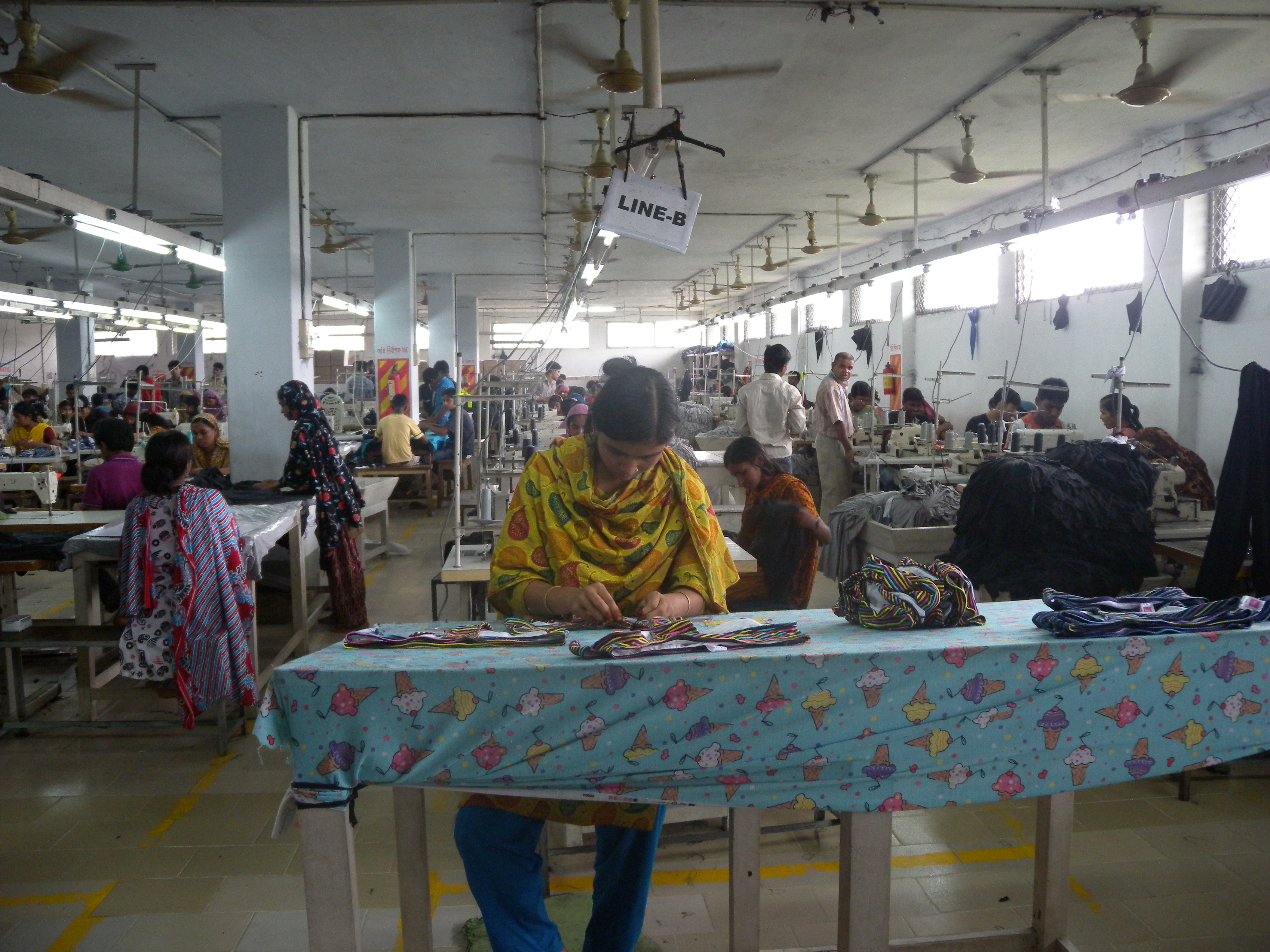
Police fired tear gas and stun grenades at thousands of garment workers in Dhaka's industrial belt on Tuesday, as protesters blocked the highway linking the capital to Mymensingh, hurled bricks and set at least one vehicle alight. The clashes, reported by Al Jazeera and corroborated by Bangladeshi business outlet The Business Standard, mark the latest flashpoint in a wage dispute that has disrupted Bangladesh's garment industry, the country's largest export earner, for close to seven weeks.
Trouble also flared in Savar and Ashulia, the dense industrial suburbs ringing Dhaka that house many of the country's roughly 4,500 export-oriented garment factories. Most plants had reopened on Tuesday morning after a comparatively calm weekend, but production shut down again as the unrest spread; close to 500 factories stood idle by midday.
A meeting that did not happen
The immediate trigger was procedural. A session of the government's minimum-wage board, due on Monday, was postponed after a worker representative said he was unwell, according to a source at the Bangladesh Garment Manufacturers and Exporters Association, the main employers' body. It was the board's third scheduled sitting; the first two had already failed to settle on a new wage figure. The session has now been rescheduled for November 23, prolonging an uncertainty that has done much to fuel the street anger.
At the board's second meeting, worker representatives proposed a floor of 30,000 taka a month. Owners are expected to counter at the rescheduled session with annual, inflation-linked increases rather than a single large jump, according to The Business Standard's reporting on the board's internal deliberations.
"The owners seem unwilling to meet our salary demands."
That frustration was summed up by one 24-year-old sewing-machine operator quoted by Al Jazeera. Another worker said he and his colleagues want to return to their machines but feared a revised pay structure would not reflect what they had demanded.
The numbers behind the standoff
Workers are seeking a minimum monthly wage of 30,000 taka, roughly $240, more than double the current floor of 12,500 taka, or about $100, which was set in November 2023 and has not changed since. Rising costs for food, housing, transport and healthcare have eroded the value of that wage, workers and labor advocates say.
- Bangladesh is the world's second-largest garment exporter after China. The sector earned about $38.7 billion in exports in the fiscal year that ended in June, according to Bangladesh Bank's quarterly review of the readymade-garment trade, and employs more than four million workers, most of them women.
- Its customers include major Western retailers such as Fruit of the Loom and Levi Strauss, meaning disruption in Dhaka is felt quickly on store shelves abroad.
- One worker, Toufiq Hossain, 35, who worked at Laila Styles Ltd. in Gazipur, died on November 3 while undergoing hospital treatment after being beaten by men hired by a rival factory during an earlier round of unrest, according to Human Rights Watch, which also documented the arrest of labor leaders on incitement charges around the same time. Police later dispersed a funeral prayer gathering held for him, drawing further criticism from labor advocates; Bangladesh's labor minister, Ariful Haque Choudhury, said at the time that those responsible for his death would be brought to justice.
- Border Guard Bangladesh has deployed hundreds of additional personnel to the industrial belt, backed by drones and body-worn cameras.
A dispute with deep roots
The current round of unrest began in October, but it sits atop longer-running grievances. Bangladesh's minimum wage for garment workers is normally reviewed every few years through a tripartite board of government, employer and worker representatives; an amendment to the Labour Act passed in April shortened that cycle from five years to three and barred the blacklisting of union organizers, a change pushed in part by international pressure.
That pressure has included the International Labour Organization, whose director-general, Gilbert Houngbo, traveled to Dhaka in July and met with government, labor and employer representatives to discuss wage-setting mechanisms, days after Bangladesh became the first country in Asia to ratify all ten of the ILO's fundamental conventions. The current government, led by the Bangladesh Nationalist Party, took office in February after the country's first election since the 2024 uprising, and had campaigned in part on a pledge to link wages to inflation.
Owners cite their own strain
Factory owners say they are not simply stalling. BGMEA has separately told Bangladesh's central bank that the industry is "passing through a deep crisis," citing falling global demand, rising production costs and geopolitical instability, and has lobbied for stalled export incentives and emergency wage-support loans to help cover payroll. Employers' associations have called for wage negotiations to resume "as soon as possible," while noting that a labor-law provision allowing "no work, no pay" suspensions gives owners room to halt pay when protests disrupt production — a point workers say compounds their hardship rather than resolving it. Some owners have also pointed to the sector's own recent instability, including factory closures and job cuts reported in the months since an earlier wage increase took effect, arguing that a large, immediate jump in labor costs risks accelerating orders moving to lower-cost competitors such as Vietnam and Cambodia.
A government balancing competing pressures
The dispute has placed Bangladesh's interim leadership in an awkward position less than a year into its term. The government formed the current wage board on November 1, after an earlier week of unrest, but workers have said the board's pace and the lack of a clear implementation date have only deepened mistrust. Officials have offered conflicting signals on timing: one wage-board member has said revised pay would reach workers' accounts in January, while the board's chairman has separately said the new structure itself would take effect in December, a discrepancy that has not been publicly resolved and that labor organizers say adds to workers' skepticism that any agreement reached on November 23 will be honored on schedule.
A region watching Dhaka closely
The stakes extend beyond Bangladesh's borders. Apparel buyers in the United States and Europe have spent much of the past decade diversifying sourcing away from any single country since the 2013 Rana Plaza factory collapse killed more than 1,100 workers and forced a global reckoning over garment-supply-chain safety, and labor groups say a protracted, violent wage standoff gives multinational brands another reason to shift orders to competitors such as Vietnam and Cambodia even as it raises the stakes for Bangladeshi workers who have comparatively few other options. The country's business-humanrights watchdogs have also flagged reports of mass arrests and threats against organizers since the protests began, a pattern Human Rights Watch says risks deterring workers from asserting wage demands through recognized union channels rather than street demonstrations.
What comes next
Officials have said a new wage structure is expected to be finalized in December and take effect from January, with back pay for December due alongside January wages under at least one official account of the timeline. Whether that timeline holds depends on the November 23 session producing an agreement that both sides can accept, something the board's two previous meetings failed to do. Human Rights Watch has urged Bangladeshi police to use force only when necessary and proportionate and has called on international clothing brands to ensure their sourcing contracts do not make a living wage unattainable for the workers who supply them. For now, with factories reopening and closing again within the same day and a key meeting a week away, the standoff shows little sign of resolving itself before the next scheduled round of talks.

Ukraine says strike collapsed arch of Russia's Crimean Bridge in 'unprecedented' operation

Mozambique Opposition Leader Goes on Trial on Terrorism Charges Over Deadly Protests

EU adds 113 names to Russia sanctions list as Ukraine peace talks resume under strain
