Senate passes major permitting overhaul, sending energy bill to a divided House
A bipartisan bill rewriting federal rules for environmental review, transmission siting and data-center electricity costs cleared the Senate 62-33 on Thursday, but its fate in a House that Democrats are poised to control come January remains uncertain.
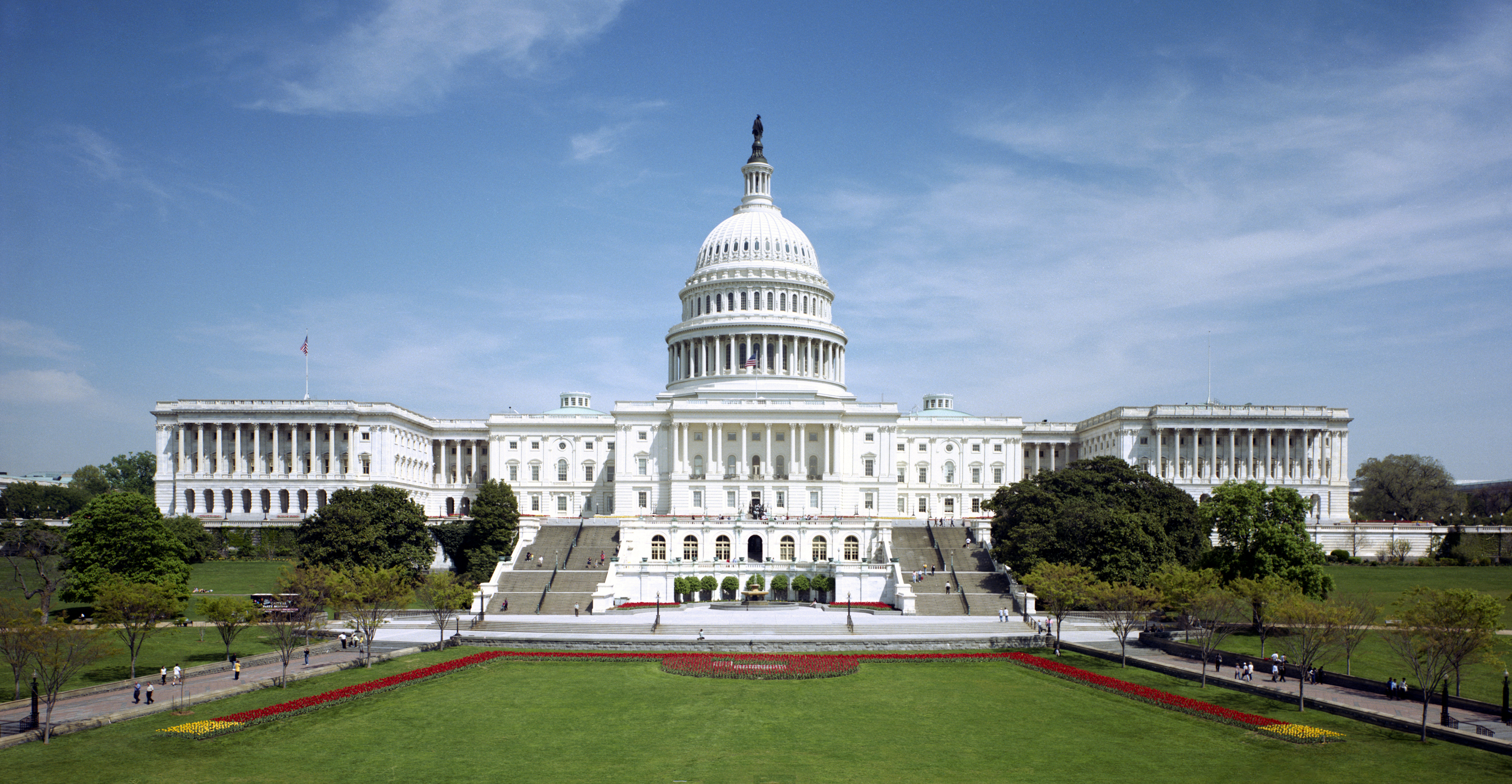
The Senate voted 62-33 on Thursday to pass one of the most sweeping rewrites of federal permitting law in years, approving a bipartisan bill that changes how the government reviews energy and infrastructure projects and sending it to a House that Democrats are poised to control in January. The vote, recorded by the Senate as Roll Call Vote 270 of the second session, capped years of on-and-off negotiations over how to speed approvals for pipelines, transmission lines, mines and data centers while limiting the lawsuits that have stalled many such projects.
The measure, known as the Bipartisan American Affordability and Jobs Act, was written by two pairs of ideological opposites on the Senate's energy and environment committees: Republicans Shelley Moore Capito of West Virginia and Mike Lee of Utah, and Democrats Sheldon Whitehouse of Rhode Island and Martin Heinrich of New Mexico. It passed by attaching its text, through a floor amendment, to H.R. 2347, an unrelated House-passed tax bill that the Senate used as a legislative vehicle, a common but little-noticed maneuver for moving major legislation when the two chambers are working from different bill numbers.
A deal years in the making
Lawmakers have tried and failed to overhaul the National Environmental Policy Act and related permitting statutes repeatedly since 2023, as demand for electricity from data centers, manufacturing and the broader push toward domestic energy production collided with reviews that routinely take years and invite lawsuits. Capito and Whitehouse, who chair and serve as the top Democrat on the Environment and Public Works Committee, saw talks break down over offshore wind before agreeing to resume them. In a joint statement in March announcing that they and Heinrich would restart negotiations, the two Democrats said they expected "no further interference with already-permitted wind projects" as a condition of coming back to the table.
The resulting 417-page bill, formally S. 5653, was introduced on September 30 and cleared an initial procedural hurdle on November 9 by a vote of 73-25, the Senate's first major legislative action after this month's midterm elections, in which Republicans lost at least eight Senate seats and 42 House seats. Senators then voted to end debate on a rewritten substitute amendment on November 16, 70-27, formally adopted the substitute two days later, and invoked cloture on the underlying bill on November 18 before Thursday's final vote.
What the bill changes
The legislation touches several federal statutes at once, including the National Environmental Policy Act, the Clean Water Act, the Endangered Species Act and the National Historic Preservation Act. Among its central provisions:
- Projects that do not require a full environmental review would face a one-year deadline for agencies to decide on their permits once an application is complete.
- Courts that find a NEPA violation would generally be directed to send a permit back to the agency for correction rather than voiding it outright, a change meant to keep projects from being shut down entirely over paperwork errors.
- Work that adds or maintains capacity within an existing transmission right-of-way would be categorically excluded from NEPA review.
- Lawsuits challenging permits would generally have to be filed within 150 days, and most plaintiffs would have to have already raised their objections during the agency's public comment process.
- The Federal Energy Regulatory Commission would gain new authority over interstate transmission siting and would be directed to revise cost allocation so that large data centers, rather than other ratepayers, cover more of the transmission costs their electricity demand creates.
A manager's amendment added in the final weeks incorporated changes sought by Democrats and tribal governments, including a longer window for tribes and other parties to object to agency environmental reports and expanded consultation requirements for projects near culturally significant sites. It also folded in unrelated provisions intended to streamline permits for prescribed burns used in wildfire prevention.
A split vote, a split reaction
The roll call broke down almost entirely along a familiar but imperfect line: 47 Republicans voted yes and two voted no, while 14 Democrats joined them and 30 Democrats voted against the bill, with one independent on each side. The bill needed 60 votes to survive a filibuster and cleared that bar with two votes to spare.
Industry groups that have pushed for permitting changes for years welcomed the outcome. The American Petroleum Institute called the bill a "historic opportunity" to modernize a permitting system it has long argued discourages investment in both fossil-fuel and clean-energy infrastructure alike. Homebuilders and the U.S. Chamber of Commerce issued similar statements of support as the bill moved through the Senate.
Environmental and tribal advocates were far less enthusiastic. The Sierra Club and the National Wildlife Federation opposed the bill over its limits on judicial review and changes to the Endangered Species Act, while Earthjustice argued the restrictions on lawsuits would curtail "access to effective legal remedies" for communities near new projects. Tribal governments in the Pacific Northwest said the bill's transmission and mining provisions threatened sacred sites despite the added consultation language, and Nevada Democrat Catherine Cortez Masto had said in the weeks before the vote that she could not support the bill unless its National Historic Preservation Act provisions were removed. Maryland Democrat Chris Van Hollen had separately said he would oppose the measure over its treatment of offshore wind leasing.
"Americans can't afford to wait for lower electricity prices. We need to pass this bill now," Heinrich said as the Senate moved toward final passage.
Whitehouse, who has spent much of his Senate career on climate policy, described the bill in more cautious terms as the floor of what Democrats could accept on environmental protections rather than a ceiling, while Capito called its passage "a win for America."
A harder road through the House
The bill now goes to the House, where its prospects are considerably less clear. The chamber passed its own, narrower permitting bill, the SPEED Act, last December, and House Republican leaders have not committed to taking up the Senate's broader version. Complicating matters further, Democrats won control of the House in this month's midterms, and Minority Leader Hakeem Jeffries, who is expected to become speaker when the new Congress is seated in January, has said the Senate bill "falls short" on environmental and tribal protections, according to his office, even as he has stopped short of ruling out eventual support.
Because the current Congress ends in early January, the two chambers would need to agree on identical text and send it to the president's desk before then or the entire process would have to restart in the new Congress, where Democrats would control the House and a narrower Republican Senate majority would remain. President Trump has broadly supported the permitting push while separately vowing to block any approvals for new wind turbines, a position that could complicate the offshore wind compromises Senate negotiators built into the bill.
The lame-duck session's calendar leaves only a few remaining legislative weeks before the end of the year for the two chambers to reconcile their approaches. For now, the bill's authors are treating Thursday's vote as validation of a deal that took years to reach, even as its final shape, and its fate in a chamber about to change hands, remains unresolved.

Trump order requires federal contractors to clear congressional inquiries with the White House

Divided appeals court rules House pandemic-era proxy votes unconstitutional

Second Federal Judge Blocks Construction of Trump's 250-Foot Arch Near Arlington Cemetery
