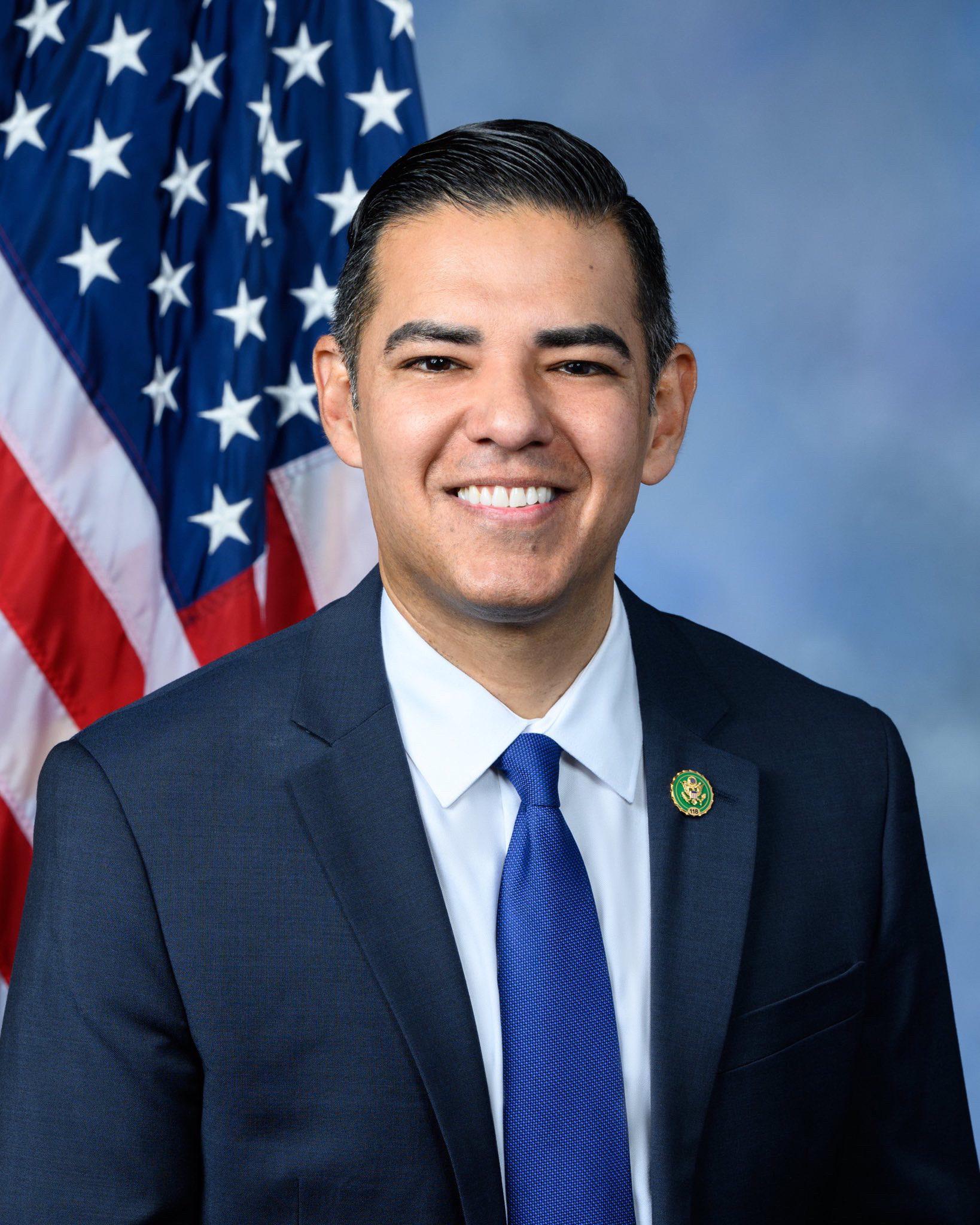
Senate committee hears Navy secretary nominee who still needs a legal waiver to serve
Hung Cao, acting Navy secretary since April, testified before the Senate Armed Services Committee on his nomination to the permanent post — a confirmation that cannot proceed until Congress waives a seven-year retirement rule, with Republicans racing a roughly seven-week window before Democrats take control of the Senate in January.

The Senate Armed Services Committee held a confirmation hearing Tuesday for Hung Cao, President Trump's nominee for the permanent post of secretary of the Navy, a job Cao has held in an acting capacity since April. The hearing notice posted by the committee listed the session, chaired by Sen. Roger Wicker, R-Miss., with Sen. Jack Reed, D-R.I., as ranking member, for 9:30 a.m. in the Dirksen Senate Office Building, with Cao as the sole witness.
In his prepared opening statement, Cao recounted fleeing Vietnam as a child before the fall of Saigon, growing up partly in West Africa, and spending what he described as 32 years in uniform, including combat deployments to Iraq, Afghanistan and Somalia as a Navy special operations and explosive ordnance disposal officer. "This is the absolute honor of my life," he told the committee, laying out three priorities if confirmed: taking care of sailors and Marines, advancing shipbuilding, and what he called defending the homeland. He likened the moment to 1939 and described the Navy's shipbuilding push as "our Marshall Plan."
A waiting period written into law
The hearing is procedural rather than final, because Cao is not yet legally eligible for the job he has been filling on an acting basis. Under 10 U.S.C. § 8013(a)(2), a person may not be appointed secretary of the Navy within seven years of being relieved from active duty as a commissioned officer. Cao retired from the Navy as a captain in October 2021, meaning he would not clear that bar on his own until 2028.
Clearing the way requires a congressional waiver, which Congress can grant only through legislation acted on by both the House and Senate, according to reporting by Military Times. A Senate waiver vote would need 60 votes to advance, giving opponents a filibuster option before any confirmation vote is even reached. The seven-year threshold itself dates only to 2021, when Congress lengthened it from five years as part of the same legislative vehicle that let Lloyd Austin serve as defense secretary without meeting the old rule. Jim Mattis received a similar waiver in 2017. Before Mattis, Congress had granted only one such waiver since the Navy secretary post was created in 1947, for Gen. George Marshall in 1950. That history means the rule has now been waived for three nominees in under a decade after being invoked only once in the preceding seven decades, a pattern Cao's critics say Congress should stop normalizing and his supporters say reflects the pool of recently retired officers with relevant experience.
A nominee with an unusually public political record
Cao's path to the hearing room has run through electoral politics as much as the Pentagon. He ran for Virginia's 10th Congressional District in 2022 and lost, then ran against Sen. Tim Kaine, D-Va., in 2024 and lost again, falling roughly nine points short despite President Trump's endorsement in the Republican primary, according to Breaking Defense's account of his biography. After the 2024 loss, Trump nominated him to be under secretary of the Navy; the Senate confirmed him in October 2025. Between the two election defeats, Cao spent roughly three years as a vice president and client executive at the defense contractor CACI International. He became acting secretary in April 2026 after Phelan's departure from the post, and Trump announced on Sept. 1 that he would nominate Cao for the permanent job, writing on Truth Social that he was "pleased to nominate a true WARRIOR" and that "we need Patriots like Hung leading our Navy and Marine Corps."
The vacancy and the uncertainty around it land at a moment the Navy has cast as consequential for shipbuilding capacity, unmanned systems and recruiting, the areas Cao named as his priorities in both his opening statement and in advance policy question responses he submitted to the committee. In those written answers, Cao said his central task was "increasing the size and readiness of the fleet, strengthening the maritime and defense industrial base, and providing more capabilities and capacity to our warfighters." Sailors, Marines and Navy civilian employees have operated for seven months under an acting secretary whose legal authority to hold the job long-term remains unresolved, a gap that also touches the Navy's role inside the Pentagon, which the administration now calls the Department of War; Cao referred in his statement to taking direction from "the Secretary of War," Pete Hegseth.
Reaction splits along familiar lines
Objections to the waiver have come from both parties, though for different reasons. Elaine Luria, a Navy veteran who has argued Cao's eligibility problem is straightforward, said in September that "Mr. Cao has only been retired 5 years" and that "he is ineligible to serve as Secretary of the Navy under 10 U.S.C. §8013," framing it as a matter of following the statute as written. Republicans have been more focused on timing than eligibility. Rep. Rob Wittman, R-Va., the House Armed Services Committee's vice chairman, told Military Times the waiver "can be done," adding: "But we have to get started and get after it now." A separate tracker of the nomination's path through Congress noted that Senate Democrats had signaled resistance to the waiver itself, not just its timing, over what they described only as concerns about Cao's record.
"My Sailors and Marines know that I am never above them, never below them, I'm always beside them."
That line, from Cao's prepared remarks, was the closest the hearing came to addressing the political controversy that has trailed his nomination; he did not directly address the waiver fight or his election losses in the statement released by the committee.
What happens next
No committee vote on Cao's nomination had been scheduled as of Tuesday, and no waiver legislation has advanced in either chamber. The timing works against the nomination: Democrats won control of both the House and Senate in the November midterm elections and take over when the new Congress convenes on Jan. 3, 2027. If the current Republican-controlled Senate does not confirm Cao, and the House and Senate do not pass the waiver, before that date, his nomination would lapse and would need to be resubmitted to a Democratic-controlled Senate where the waiver would need 60 votes in a chamber already on record raising objections to his record. That leaves a roughly seven-week window, bounded by the Dec. 11 government funding deadline that is already consuming floor time, for Senate Republicans to act if they want Cao confirmed before the handover.
Senate Clears Procedural Hurdle on Bipartisan Energy Permitting Overhaul

Senate clears key hurdle on bill ending IRS tax bite for sexual-abuse survivors

Democrat edges out House Rules Committee chair in tight North Carolina recount race